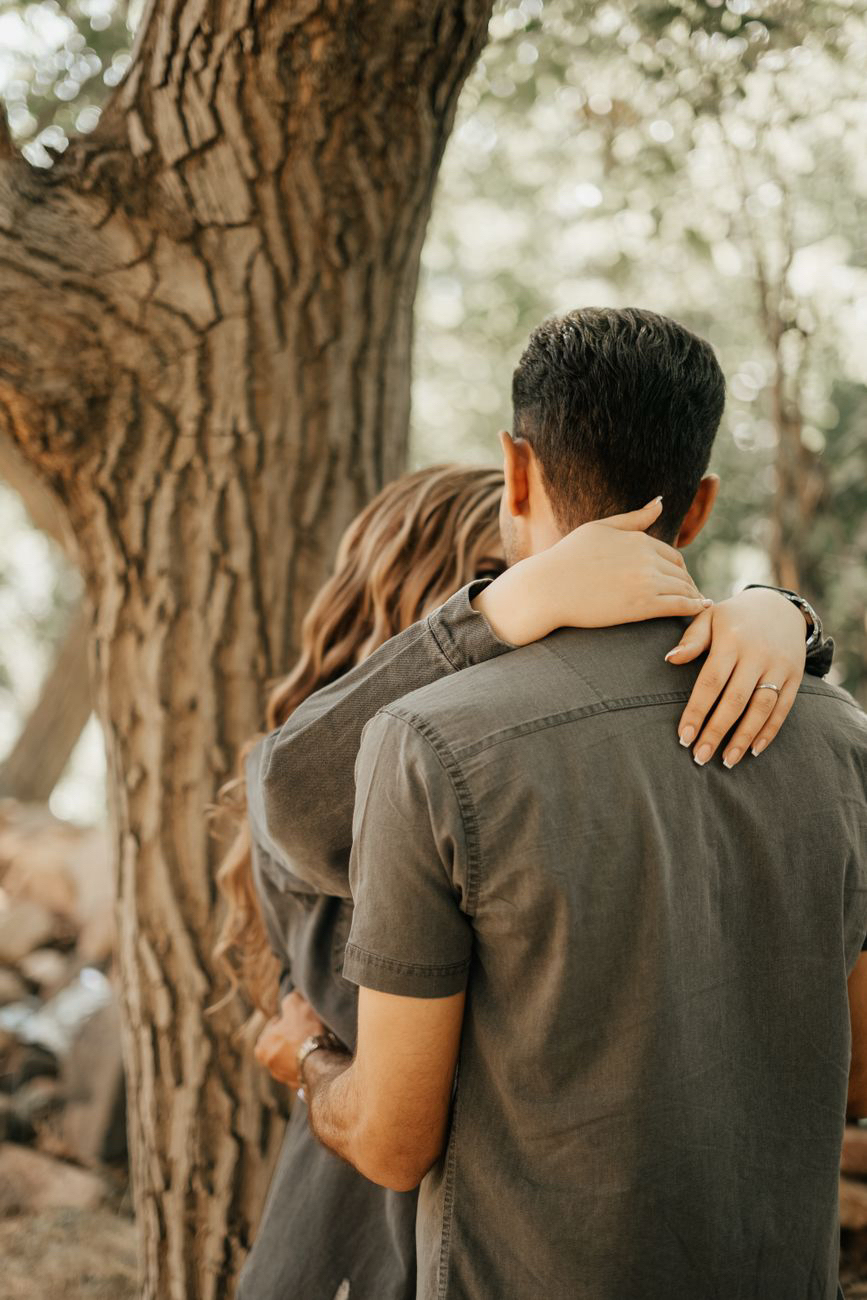

Beverly said it. I never forgot it. “You can come to me for a hug anytime.”
I thought she meant it. Growing up as a GenXer throughout the 70s and 80s, you’d have thought hugs would’ve been figured out by then. There’s a part of me that’s still wondering if that’s the commonality between most of us GenXers. For Beverly, at least in the moment, she probably did mean it.
I wouldn’t know.
Turns out, she may have known more than she was aware of. Even if it was purely instinct.
Recently researchers at UCLA published what happens emotionally and physically within your body when someone — loved one or not — holds you. Cortisol drops. Oxytocin, the feel-good chemical, releases. Dopamine follows. The benefits continue long after the hug does. Studies show lower stress hormones the next morning. Ten seconds with a hand pressed over your own heart produces measurable results.
Ten seconds.
And the opposite is also true. Researchers call it skin hunger. It’s a genuine physiological need going unmet. Children who grow up without consistent physical affection carry higher cortisol levels into adulthood. So there are greater levels of anxiety. More difficulty regulating their emotions. Some studies are connecting chronic touch deprivation directly to depression, loneliness, and weakened immune response. The pandemic substantiated it. Prolonged isolation tracked with spikes in anxiety and depression across every age group. We were built for hugs and physical contact. When we don’t get it, the body keeps score — the title and central argument of Bessel van der Kolk’s landmark book on trauma, The Body Keeps the Score.
That’s the world Beverly described. Anytime you need one. It sounded like a promise. What would it have been like had she delivered?
She offered that freely. She didn’t know the neuroscience. She just knew people needed it. At least that’s what she said.
“Mom, I really need a hug.” Beverly was busy in the kitchen. Or reading the newspaper. Whatever it was felt too important for me to interrupt. But her response stuck.
“Go away. I’m too busy right now, Joe.”
Using my name made it worse.
That passing moment — her chance to build into a ten-year-old boy — shaped how I learned to love other people. The research shows that love and hugging are inseparable. So I carried that absence forward without fully understanding what it cost me.
Today I make a point of hugging my kids, hugging Alissa, and even Pretzel June. The reciprocal rush of that hug powers me into the next hard thing, whatever that may be.
And now we have the research to back it up.
Your doctor is telling you to find a spare ten or twenty seconds and hug someone you love.
Beverly said it once. I needed it more than once. But today I have someone more than ready and willing to hold me.
No matter what.
What did you notice?