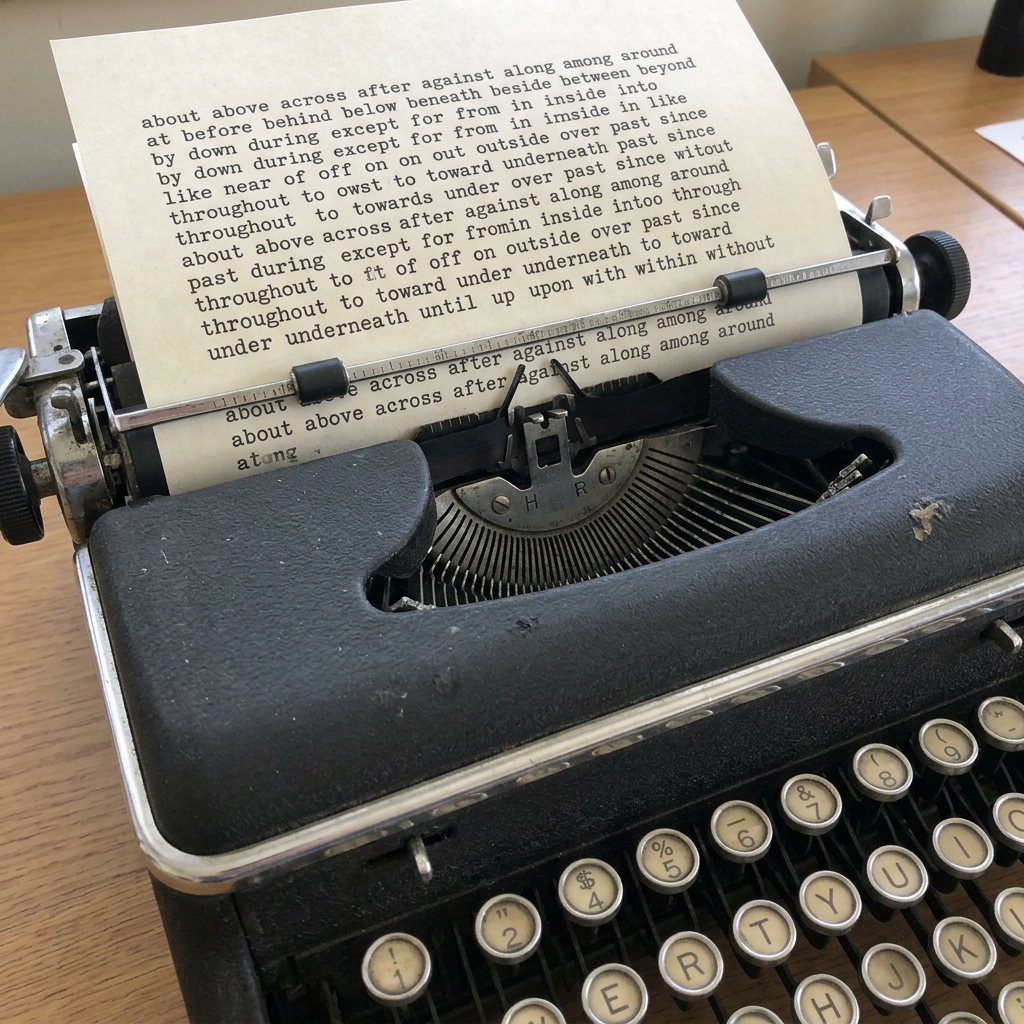

Hoping for something and hoping in someone. It’s one word. But that one word gives you solid ground to stand on.
Or it doesn’t.
For reaches. For points out past the Nissan Versa windshield at a thing that has not happened. Not yet. It’s hope for a better job. One with a higher salary, better medical benefits, and satisfies the instinct and curiosity of creative writing. The MRI shows no more cancer. The agent who finally says yes. The pimply kid whose name you can’t remember. It’s something like Jordan, Jerry, or Justin who finally calls your daughter back after ghosting her for three weeks, all while she sat devastated on the edge of her bed. For lives or dies by what comes next. Close the gap, and the hope is satisfied. Leave the gap open, and hope evaporates like cotton candy on a wet tongue. Either way, the hope ends when the outcome arrives.
In is very different. In is standing. In is a location, a foundation, a place where your feet already are, long before the outcome shows up one way or the other. Hope in a person, like Jesus, does not mean the floor won’t fall out from underneath you. It means the floor will hold while you wait to find out what’s next.
English lets us swap the two without thinking twice, and that is part of the problem. Most of us pray for and call it hope in. We do not notice the preposition doing theological work under the surface of our own sentences.
Until one day we do.
Mine happened on a Monday on I-55 Northbound, roughly twenty minutes from Cape Girardeau, on my way to an appointment that was not mine.
Silence from the passenger seat, all the way from Miner. Susan is quiet, wringing her hands, staring out the passenger window. She has been like that since we left. She asked me the first time I picked her up if she could smoke in the car. I said no. So, she’s probably jonesing for a smoke. Her appointment is in twenty minutes. I have learned better than to fill the empty space on the road with words she is in no mood to speak or hear.
So I pray. It is the quiet way I pray when I drive. Eyes fixed on the road. Hands at ten and two, most of the time. An old habit Dad pressed into me when I was sixteen, even though I already knew everything, including how to drive. Lord, I hope Susan has a good visit. I hope for her UA results to come back clean. I hope for her kids. I hope the next step in her recovery opens for her.
Somewhere around exit 95, the word skips, like a record player finding the one scratch in Purple Rain, repeating the lyric, purple rain, purple rain, purple rain. Then you pull the needle off, and just like that, the skipping stops, and I exit I-55.
For.
My hope is for her. It is a good thing, something we all should do. It is what a decent human being does when someone like Susan is sitting three feet away, carrying heavy emotions and asking nothing of you. Except, get me there safely. Only now I am noticing what that three-letter word is doing. For points out into the highway, far from the Versa’s windshield. For is reaching toward a thing that has not happened. For lives or dies by what Susan’s UA shows in forty minutes.
For. If this is the spot where my hope lives, and Susan’s results come back dirty? Then my hope dies in the Nissan long before we reach the front doors of Gibson. And her hope? It dies with it if she sees hope die in my expression. I am so not qualified to carry that.
I am a transportation coordinator. Not a counselor.
We are still a few minutes from Gibson, but my prayer is different now.
Different preposition.
Jesus, I hope in you. For her. With her. About her. All the rest of it, yes. But in you.
Three minutes to Gibson now, and the car feels different. Same stretch of MO-74. Same quiet passenger. Same appointment ahead of us both. But the floor underneath it? It has moved. The outcome is still the outcome. I still want it to go her way. I want it badly enough that my jaw is tight, and I did not notice until just now. But my hope is no longer sitting on a sheet of paper that the research assistant will hand her.
I pull into the lot, finding a spot nearest the door, because Susan has a hard time walking long distances. She is grateful, thanking me before getting out and lighting her cigarette. She always thanks me. I tell her I will be right here when she is done. She nods and shuts the door gently, the way someone shuts a door when they have already used up most of what they had for the morning.
I wait. I read a little. I watch a young woman across the street at East Missouri Action Agency loading two toddlers into a faded red Dodge Caravan, with Wendy’s and McDonald’s wrappers spilling onto the ground. I think about how many more drives she has ahead of her, how many more times she’ll load and unload her son and daughter, and nobody will ever know. I pray again, and this time the preposition stays put. In you, Jesus. In you, Jesus. In you, Jesus, I hope.
She comes out after a while. I cannot read her face, and I do not try. She gets in. Buckles. Looks straight ahead.
“Okay,” she says. Just that.
“Okay,” I say back.
I put the car in drive. I take her home the long way, because the long way is prettier this time of year, and because some drives are not about getting there fast.
The preposition is the whole thing. For hangs on what happens. In hangs on who is already there. For is a reach. In is a floor. For can be disappointed. In cannot, because the One it stands on does not move.
I will still pray for. I will pray for Susan’s results, the minivan mom and her kids, Susan’s next step, and the thousand other things that matter, none of which I can fix from the Versa’s driver’s seat. For is a fine prayer.
It is just not a foundation.
The foundation is a preposition shorter, and a whole person deeper.
In.
What did you notice?