
Nonprofits run on donations from federal, state, and local grants as well as private donations. Your hard-earned dollars donated to their nonprofit cause will fund staff, programs, equipment, and keep their lights on. Most, if not all, nonprofits spend a lot of time telling their donors what they accomplished.
“We provided 400 families with enough food for a five-person household.” “We distributed 30,000 meals that will feed 108 children for the next year.” “We raised $500,000, enough to fund us for the next six months.”
Those numbers do matter because they show the scale of the work. The thing is, that’s all it does. Shows what ‘they’ accomplished. So what matters more? The people they served? The volunteers who gave up their time? Or the amount of money raised through fundraising work?
Each story raises the bar by showing who was impacted and why. That emotional impact is worth far more than $500,000 in a government grant. Marcus’s story is a great example.
Marcus leaves to get his lunch from 8th Street Ministry at 11:58. Any later, and the line wraps around the building. He’s hungry when he gets there — payday’s not until Friday, and the math on groceries hasn’t worked in his favor. Hunger is a better motivator than embarrassment. Lucky for him, his job at the ACE Hardware store four blocks away is a quick four-minute walk.
He still ends up eighth in line, not bad, but it will leave little room for eating his food. Ahead of him is Gus, the cart pusher who has a little orange flag attached to the front of his full grocery cart. The wheels creak and wobble on the sidewalk. Marcus remembers what it’s like to live on the streets. Gus is checking his phone every few minutes. “SSI comes in today,” he says, winking at Marcus.
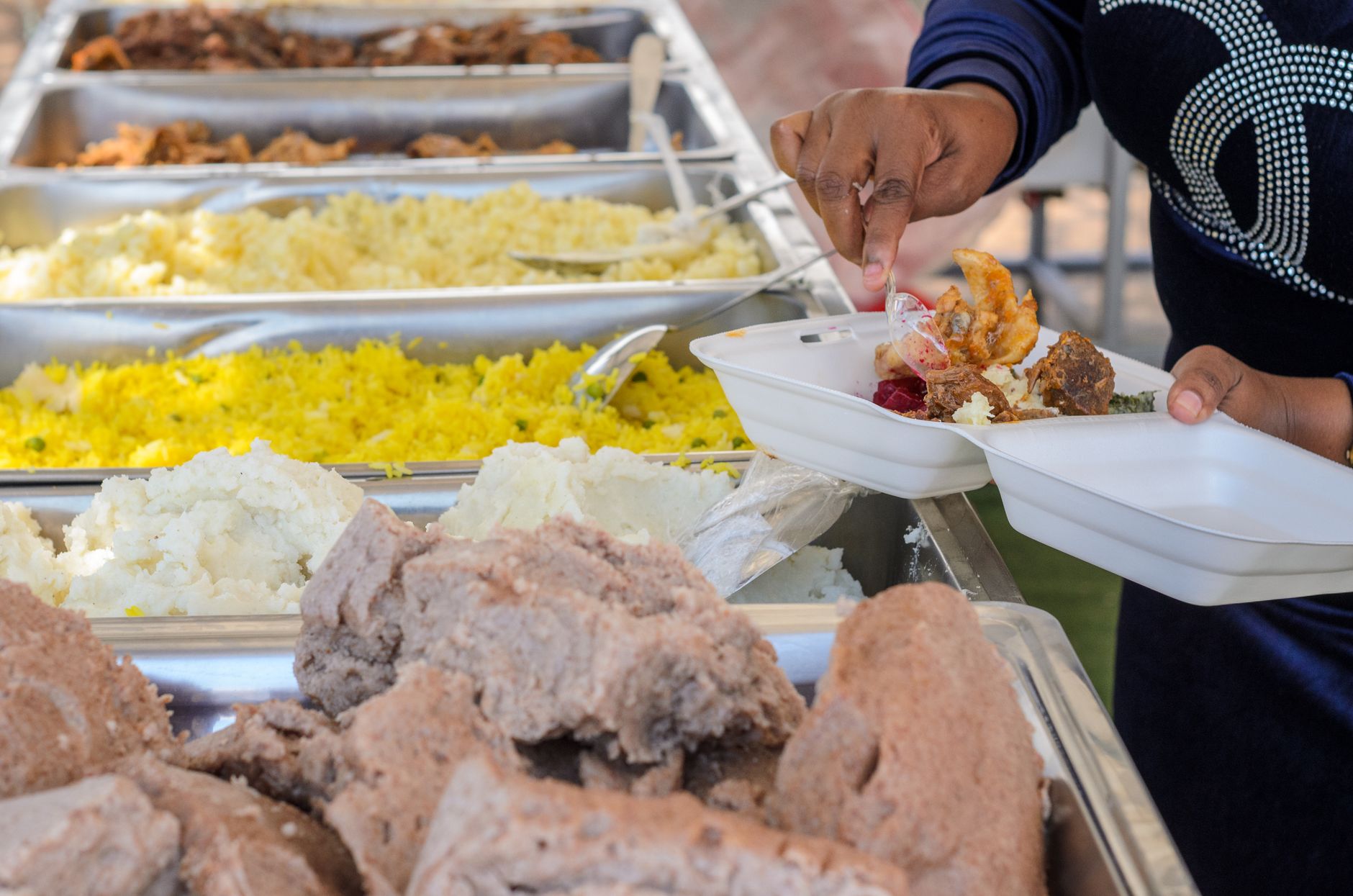
Marcus steps up when it’s his turn. A scoop of turkey, mashed potatoes, and green beans, gone soft from the steam table.
“Y’all’s turkey any good today?” the gravelly-voiced guy behind Marcus asks when he reaches the table. “Last week it was dry as *%&$.” The profanity tumbles out of his mouth out of habit. Marcus knows firsthand because it took months to break him of the same habit.
Sam, an older man with a hunched back, smiles as he scoops the tray full. “I hope not. We work pretty hard to make sure ya’ll are happy with the food. Just like every Tuesday,” he says, sliding the tray down the line.
Betty Ann takes it from there. “Have a blessed day.” Her name tag reads exactly that, and she says it as she sets a roll on his tray.
“And you, too,” Marcus says, returning her smile. He’s already calculating how many minutes he has left.
Twelve.
At the end of a long table he finds half a seat, sliding in sideways, tray precariously balanced on his knees. He’s used to taking up less space than he needs.
He clocks the bulletin board on his way out, same as he does every time. Somebody’s tacked up a new flyer: a fundraising gala, black-tie optional, at a downtown hotel he recognizes but has never walked into.
$500,000 RAISED LAST YEAR, it says, over a photo of people in nice clothes holding wine glasses under string lights.
Good, he thinks. Whatever keeps this line moving on Tuesdays.
Marcus walks back to work, four minutes to spare. The line is wrapped around the block now. He never looks back, knowing he was once at the end of it.
8th Street Ministry raised $500,000, showing their donors how many meals were served, how many people received housing assistance, and how far the organization extended its reach.
Marcus, on the other hand, shows us what those dollars look like at 12:06 on a Tuesday afternoon.
The $500,000 provides scale. The story gives meaning to the cause: feeding hungry people without resources.
That’s where storytelling becomes more than another way for a nonprofit to communicate its accomplishments. A spokesperson explains the work. An annual report measures it. A grant report documents outcomes.
But story? Story puts us inside the room where it happened.
We stand in line with Marcus. We watch him count the minutes. And somewhere along the way, $500,000 is worth more to us than the ink and paper the check is printed on.
Now it’s Tuesday lunches and a real life, one we recognize and feel.
Grants fund the work.
Data measures the work.
Spokespeople explain the work.
Story lets people feel it all.
Those emotional experiences, people remember.
What did you notice?