
Years ago I fell in love with storytelling. Nothing feels as good as writing the first few words of a new story, something no one else has come up with, in a way that you did.
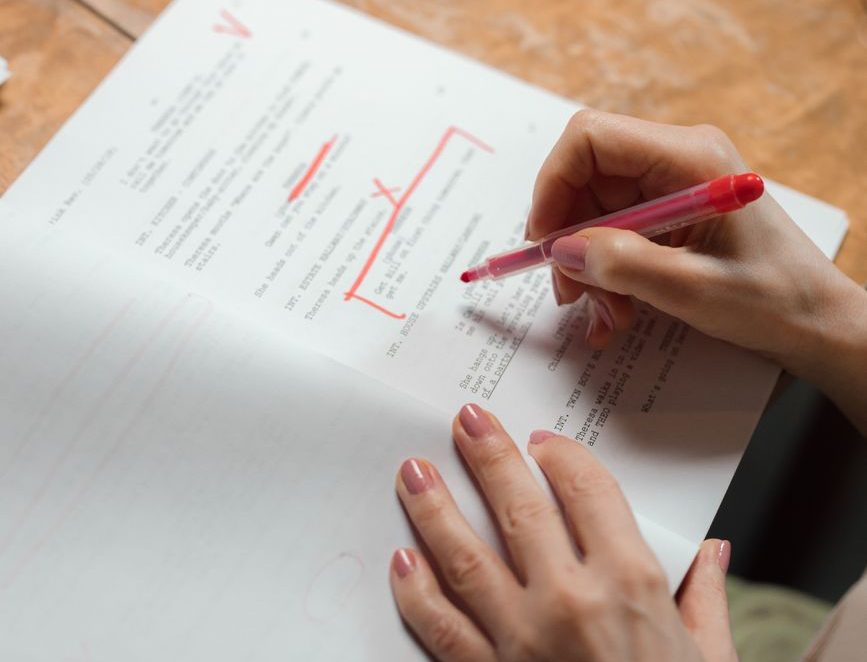
But what happens when you finish drafting your masterpiece? You must edit. In my mind, a red pencil comes out slashing and burning any words that won’t make the cut.
Nobody warns you about what you will feel when you finish your first draft. There’s a point where you’re getting to the end, and it’s like running downhill — forward momentum does half the work. You move, running faster and faster, barely managing to keep your feet underneath you.
Then the real work starts.
Editing.
Here’s where writing gets tough, because the editing is like running up the same hill, only backward, with a stopwatch, and a bystander standing at the top yelling, “This section? Right here? What are you saying? I don’t get it. Fix it.”
Remarkable as it may sound, I finished drafting a 113,000-word manuscript in less than six weeks, averaging roughly 3,700 words a day.
Now comes the hard part — cutting it down to 95,000 words.
18,000 words need to go. The problem is that all of them feel necessary and urgent for the reader to know what’s going on. I ought to know. I wrote it.
Bad writing is really easy to cut. But eliminating good writing? That’s a lot tougher. A well-drafted paragraph that doesn’t move the story and doesn’t change your characters is not worth keeping.
For me, some days of editing are structural — merging two chapters that repeat the same idea, watching thirty-four chapters turn into thirty-one, and feeling the manuscript take a deep sigh of relief.
The hardest days are the ones where nothing is technically or structurally wrong. Every scene is working. Character dialogue moves the plot. But something is off and doesn’t feel quite right. It isn’t true. Not yet. There’s a cost that hasn’t been paid, a reckoning that’s summarized instead of shown. Revisions like that require more than an outline. Your characters need to tell you what the cost is to them. So you wait, watching and rereading your own material, listening to what they are saying.
That’s what takes so long!
I used to think editing was the smaller job — the tidying up after the real work of drafting. Not anymore. Editing decides whether you really mean it. It’s slower, less romantic, and way less forgiving. But it’s also where the book stops being what I wanted to say and starts being what a reader needs to feel.
That trade is worth running up the hill backward.
What did you notice?