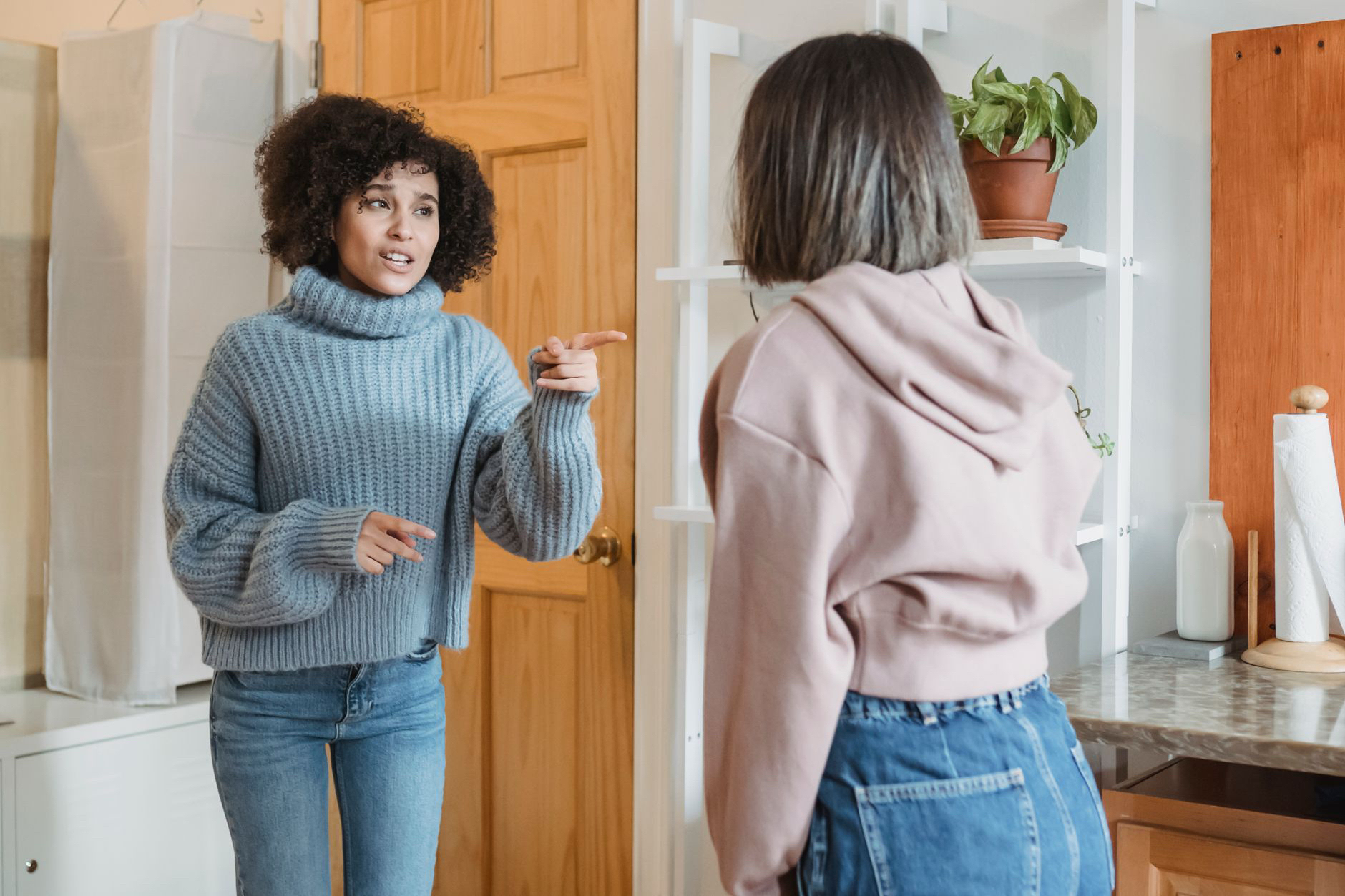

“Shut up!”
Two words. On the surface they seem harmless enough. But say them out loud, listen to what hits you. It’s not the words. It’s the intent behind them. It says, “You don’t matter.” Or, better yet, just say “I hate you.” That’s the message behind those words, because it’s all about me. You don’t count. You never did.
Often we don’t mean that. What we really want is the other person to pay attention to us for a minute. But our ego gets the best of us and we attack, reaching for words to destroy, instead of ones to build up. Wrong words outlast the moment they were spoken. Kids do it all the time, not understanding or recognizing how powerful our speech truly is. On the other hand, adults know. And they use them anyway, with zero regard for the other person.
I saw it happen once, in a Starbucks in Portland, Oregon.
Two women, best friends for years, sat across from each other arguing about the city’s homeless crisis. The line was long so I caught bits and pieces of it. Their conversation could have gone somewhere — real people, real stakes, two women who actually cared about what happened to people who had less than either of them. Then one of them, I don’t remember which, corrected the other’s language.
“You can’t say homeless anymore. They’re unhoused.”
“That’s the most ridiculous asinine thing I’ve ever heard. They are homeless.”
That was the whole fight. Voices climbed. The baristas working the counter went quiet. A Starbucks full of strangers watched two grown women stand up, knock a latte off the table, and walk out of a twenty-year friendship over one word. Nobody inside the coffee shop talked about the people sleeping outside on Burnside Street anymore. They were talking about who won the fight.
Another woman close to the door watched the whole thing. She just spoke — quiet, unhurried — to one of the young ladies, sitting two tables over with her own friend group, oblivious to anything that happened, except her phone. They were laughing about the exchange. But the woman spoke to the three, a warning, low and awkward enough that the girl’s friend went pale hearing it. Words don’t have to be loud to land hard. Sometimes the quiet ones are the most powerful.
Words do the hardest, nastiest work ending relationships with a poisonous diatribe.
Different coffee shop. Different city. Same kind of busy weekday. The barista here is working hard, taking orders, and appearing tired. Her piercings, tattoos, and blue hair make her stand out in a small town. Almost every person is looking past her, instead of paying attention to her. So the next person to order, a guy in scuffed work boots and a Cardinals cap, asks how she’s doing. Her reflexive answer, “I’m good. I guess.”
His reply? “Huh. What would make it better?”
He doesn’t let it go. He doesn’t order and move on. He pulls out a twenty and offers the woman behind him — impatient, expensive sunglasses, clearly annoyed at the delay — a trade: two minutes of the barista’s time for twenty dollars. It works. And for two minutes, he asks the barista real questions. Not “how’s your day,” the kind you ask without waiting for an answer, but “do you love helping people,” and “why is that.” She tells him the truth: work’s been hard since COVID, people are shorter with her than they used to be, some days are just hard to be there.
He took two minutes and spoke to her like a real person who mattered, choosing different words than everyone else in that line had chosen with her all morning — his words said I see you, instead of the ones that said hurry up. It turns out he owned the building.
But that’s not the part that mattered.
The part that mattered happened before anyone knew who he was: he asked, and he listened, and for one shift, a woman who felt invisible didn’t.
For me, the little things count most. And words are the smallest, heaviest things we carry.
In both of those scenes what happened over coffee, in the space of a few minutes, the people concerned had absolutely no idea how much weight their next sentence carried. One conversation chose “asinine” and publicly ended a friendship. Another chose “tell me the truth this one time” and changed someone’s whole day, making them feel special and valued. Same setting. Same short window of time. But each one had a different outcome — because of the words, not the circumstances.
We don’t usually get a warning before the sentence that does the damage. Nobody’s handed a script that says this is the line that ends things or this is the line that changes everything. We just open our mouths and find out.
So remember, your words carry weight, cut, burn, and build. They do it every time, whether you mean for them to or not. Which kind you’re reaching for — the ones that say you don’t matter, or the ones that say I see you, tell me the truth?
Choose words that count.
What did you notice?