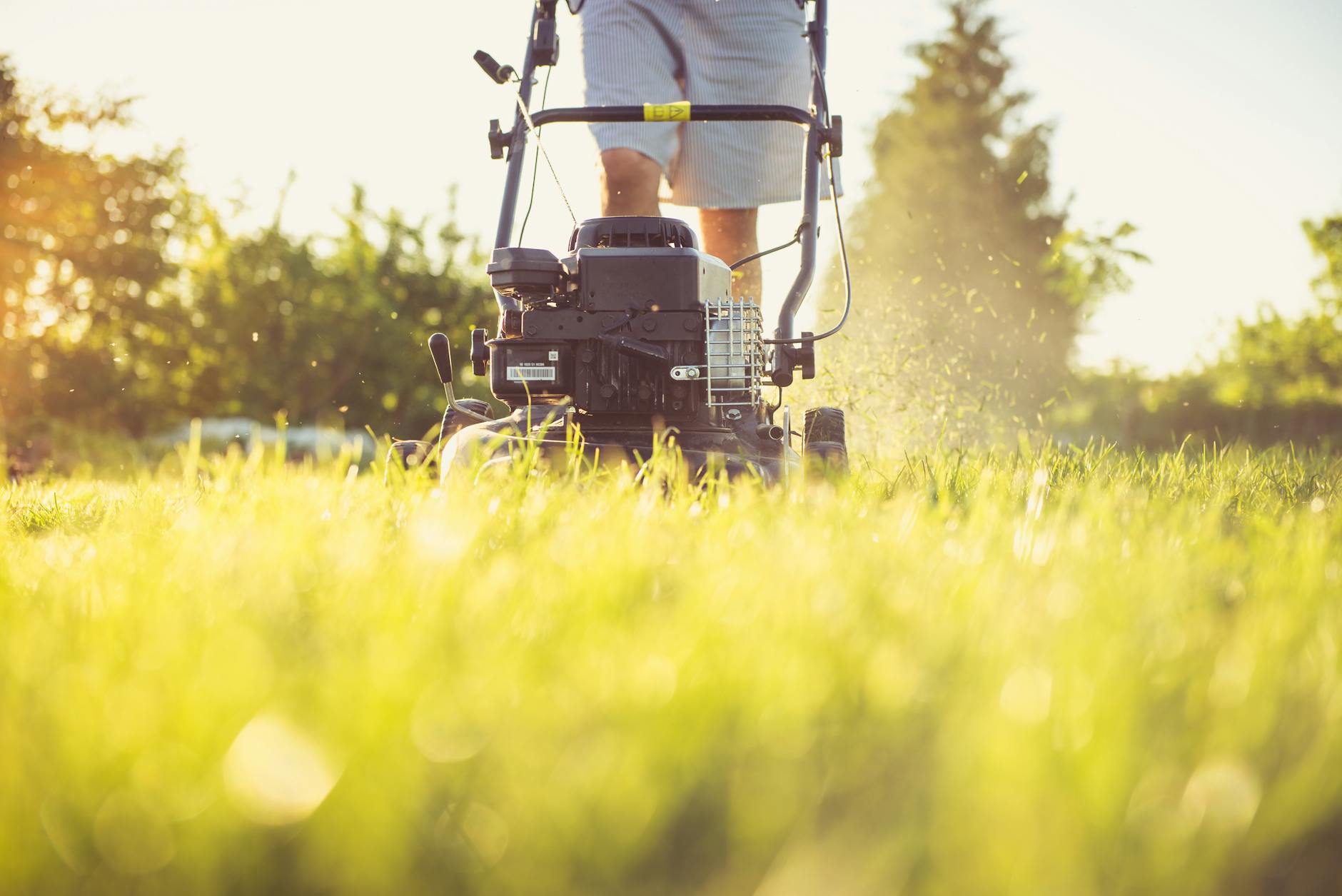

Gerald Fitch. He mowed his lawn every Thursday. So did I.
For three summers on Thursday we waved at each other across Oak Street. Just like we were old friends, which we weren’t. Neighbors. That’s what we were. There’s a difference between that and friends, though I didn’t get it. Not back then.
The white Silverado he drove had a massive dent, right above the rear passenger wheel well. I never asked him about it, and he never shared anything he didn’t want to talk about. A bird feeder hung from a shepherd’s hook near his mailbox. I think he had a dog once. Some kind of beagle mix that barked and howled at anyone passing by. Or mowing their grass. He had one kind of shoe he wore: New Balance in at least three colors — gray, white, and a green gone pale from the push mower he used.
I knew the details – but his name? I didn’t know his name. Not until the ambulance came.
August in Missouri is sticky. Uncomfortable. The kind of heat that sits on you. I was taking my trash out to the curb the night before when the ambulance, lights and sirens, came tearing down our little street, stopping right in front of his house. They didn’t wait for someone to answer the door, just broke it down and got to work.
A few minutes later I saw two of the paramedics come out, one wiping his forehead with a gloved hand, the other talking on his phone. I thought the dog was gone, but there it was, hanging back, just inside the front door. Inside a woman walked out behind the third paramedic, mascara streaking her cheeks. She was forty. Maybe. Daughter of the man? I didn’t know. Her dark hair was pulled back tight in a pony tail, and she was rubbing her arms like she was cold, but it wasn’t. I’d seen it before when Gina lost her Dad. It was a comforting, soothing action. The thing you try to do when you’re holding yourself together.
“Think we should go over, Mike?” I shook my head, no.
“Let’s not bother them.” We didn’t go over.
The real reason I didn’t go over? I didn’t know his name. It felt wrong to walk up to a stranger’s porch and ask how they were doing when you didn’t so much as know their name.
Gerald Fitch.
I got it from the obituary a week later, which Gina found online because she noticed the Silverado was gone, the bird feeder empty, and she said, “Someone came with a crate and carried off that poor dog. I swear Mike, it sounded like it was crying!”
Gerald Fitch. He was sixty-one, worked thirty years for Industrial Solutions, a company that made high-powered fans and industrial filtration systems. Gerald had two daughters in different states and a sister in Pensacola. Evidently he enjoyed woodworking and Cardinals baseball, which might explain the headphones he wore while he mowed. And he volunteered Thursday mornings at a food pantry on Broadway before coming home to mow.
Thursday mornings.
All three summers.
I waved at him in the afternoon not knowing where he’d been. He never said. I never asked. We just waved, two men on riding mowers, doing the responsible thing, keeping up appearances, being the kind of neighbors who wave.
The bird feeder is still there. Whoever owns the house now hasn’t taken it down, and I notice it every Thursday when I pull my mower out of the garage. The paint is going. The roof of the little barn has started to curl at one corner.
I don’t know if the new people know it’s there. I don’t know if they know about Gerald Fitch, who put it there, who filled it every week, who waved at me like I was someone worth waving at for three years running.
I should have gone over.
I know that now. I knew it then, too, standing at my curb with the trash can handle in my hand, watching a woman hold herself together on a porch I’d never set foot on.
I just didn’t move.
What did you notice?