
Mom turned ghost white. Ironic, especially when Uncle Wade was calling on spirits to answer Dad’s questions about the future.
I was thirteen. I didn’t believe in any of it — fortune tellers, spirit mediums, the Psychic Network Dionne Warwick hawked on late-night TV for 99 cents a minute. Ouija boards from Toys-R-Us. Those 976 numbers you could call to get your future told. Mom caught me and Todd calling a few of those once. It was all Todd’s idea. I think she knew that, which is why I wasn’t in as much trouble as I could’ve been.
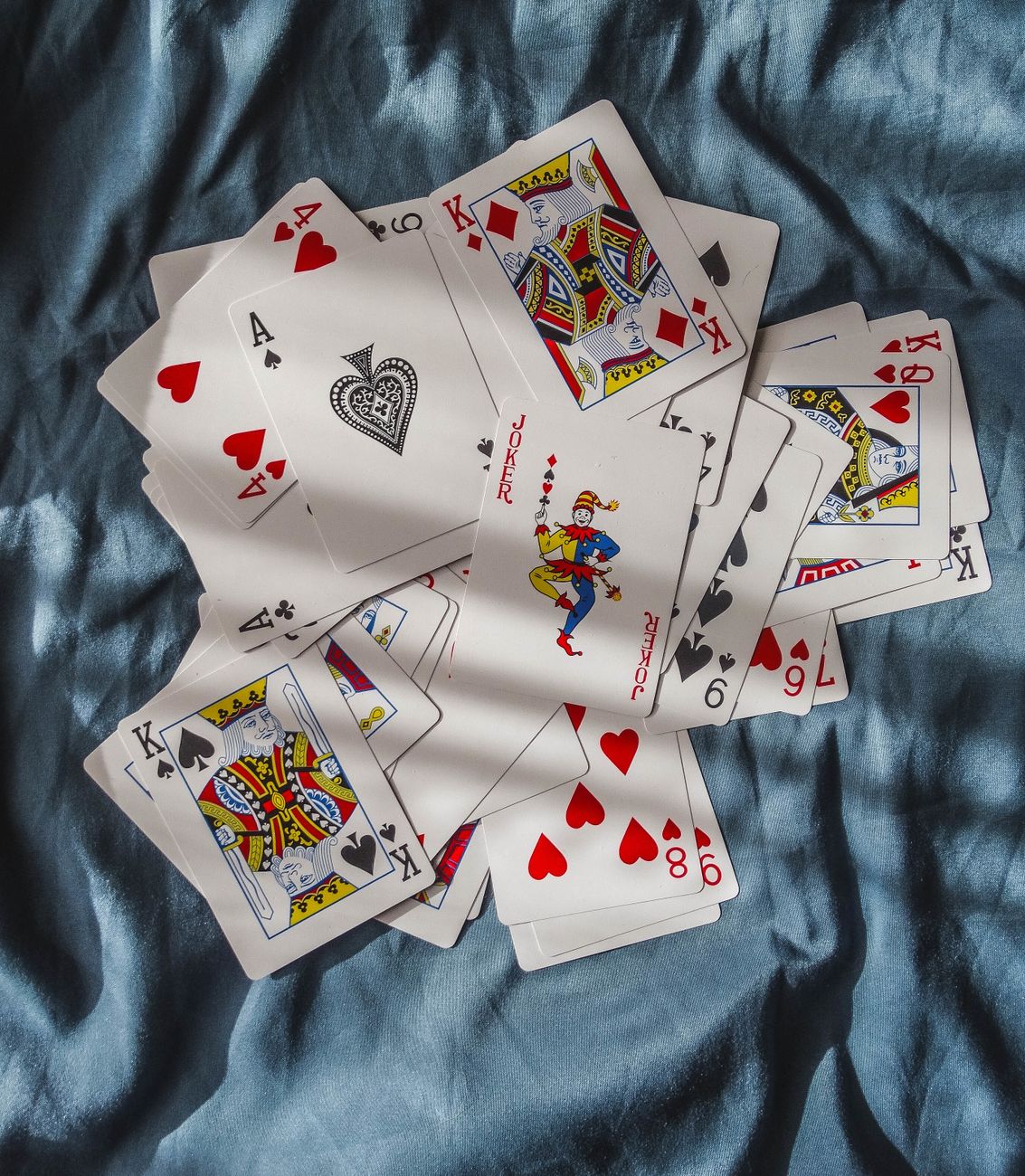
But that was just messing around. This? This was different. This was my Uncle. Wade Pruett. Sitting down at our kitchen table, with a black silk cloth, a dead cigar, and twenty-five cards he hadn’t yet turned over.
“Cade, come over here,” Mom called to me. Luther Vandross’s Stop to Love was playing softly in the background. Susan, my mother, was wearing a black blazer, sleeves rolled up to her elbows. I’m not sure what she did, but whatever it was, she was tired when she got home. Small cuts covered a few of her fingers, with two Band-Aids covering the tips of both index fingers. Her tan pants were smooth, pleated, and wrinkled where she’d been sitting at a desk. I guessed that part. I didn’t really know. Not then. All I knew was she wanted me close to her, wrapping her arms around me from behind, holding me close. I could still smell the perfume she put on that morning. It smelled like a thousand flowers, all mixed together. Soft. Warm. Roses, for sure. Mom didn’t hug me like this for nothing. I think she was spooked.
“Mom,” I whined, trying my best to pull away, but she pulled me in closer.
Rick, my Dad, was sitting opposite Uncle Wade at the table, the playing cards spread out in neat rows over the black silk cloth. Personally, I think Uncle Wade did it to be theatrical. He never did a reading without the black silk.
“You know this doesn’t work,” he eyed his sister, “unless you are a true believer, Sue.” No one called my Mom Sue except her older brother Wade. Not even her parents did that, unless they wanted an earful.
She sighed. “Want me to leave, Wade? Is that it?”
Wade gave her a crooked little smile. “Well. Since you mentioned it.”
Mom squeezed me again, then let me go. “Fine. I’ll sit down.”
“That’s gonna help, Sue.” He patted the seat on his left, letting me decide if I wanted to sit down or stick around at all. “There you go.”
She huffed, plopped down in the chair, crossed her arms and legs, scowling at Wade — probably more about the Sue crack than the disbelief comment.
“You too, Cade. Have a seat.” His cigar smoldered in the ashtray. Mom hated the smell, and it took a few days for the house to air out, but Dad wanted him to read the cards, so she tolerated it for both of them.
Wade waved his hands over the cards and scooped them all up, shuffling and cutting them like Dad did when they played progressive rummy or canasta. Dad was good at shuffling cards. Like he’d been doing it his whole life.
Dad leaned back in his seat. “Wade. All of this nonsense,” he pointed at the black silk and cards Wade continued to shuffle, “is just that. Nonsense. None of it is real. It’s complete BS. You can’t tell the future. Cards can’t do that.” He loosened his tie, unbuttoned his shirt cuffs, and rolled them up to his elbows.
“Whatcha think about that, junior?” Uncle Wade ruffled my hair. “Think it’s all nonsense?”
“I dunno,” I said, shrugging. I was thirteen. All I knew was MTV, Miami Vice, Top Gun, Star Wars, and girls were getting to the age where they were sort of okay. But fortune telling? I thought that was for people who could afford the expense, like Dionne Warwick. “There may be something to it, but,” I looked at Dad, whose expression was blank, except for both raised eyebrows, “well. I dunno.”
Wade picked up the smoldering cigar after setting the cards in the middle of the silk and took a long drag. “Fair enough there, kiddo.” He pointed at Mom. “Our mother? She was a medium.”
“Oh, stop it, Wade. Just because she occasionally got things right.”
“Occasionally, Sue?” He laughed, took another drag, blowing the smoke over his head. “Try every time she saw a vision. It came true, Cade! Every. Single. Time.” He banged on the table. “Not once was she wrong, Sue.” He pointed a thick finger at her. “And you know it.”
Wade, smiling, stuck the cigar between his teeth like Colonel Smith from the A-Team, and dealt twenty-five cards face down. His uniform shirt from Stanfield’s Garage, stained with oil, grease, sweat, and cigar smoke, was open, exposing his white tank top. Wade’s name was embroidered above the right pocket.
“Comin’ up on seven-thirty, sixty-three degrees out there in Des Moines — great night for hanging out on the back porch. Here on One-Oh-Two-Five KRNQ, this one’s been sitting in your head all week, whether you wanted it there or not — here’s Toto, ‘I’ll Be Over You.’”
Through the kitchen window, I could see our neighbor, Mr. Fenton, pushing his mower along the back fence line, the last of the evening light catching the cut grass as it flew. Somewhere down the block, another one was running. May in Iowa. Every yard in the neighborhood needed it.
Wade turned the first card.
The nine of spades landed face up on the black silk, and something shifted in Wade’s expression — not much, just enough. The cigar stayed between his teeth, but he stopped chewing on it, biting on it hard.
He turned a second card. The ace of spades.
Now I felt it. The whole room felt different. I didn’t know why. I was thirteen. I didn’t know what any of it meant. But I knew what Wade’s face meant, because I’d seen that face on coaches and teachers and once on a doctor in a waiting room. Someone is deciding, in real time, whether to say it out loud. Or not.
Wade didn’t speak.
He turned three more cards, arranging them slowly, and sat back. The cigar went out. Cold. He didn’t relight it.
“Well?” Dad said.
“Good things coming,” Wade said. “For both of you.” He smiled, pointing at Mom, then at Dad. It was a good smile. Practiced. Like a used car salesman. “Rick? That thing at the firm? It’s all going to work out just fine. Don’t you lose any sleep over it, kay?”
Dad straightened. “How did you—”
“Cards.” Wade tapped the silk with one finger, winking at his brother-in-law. “Susan? You’re worrying about Garrett.”
Mom’s chin came up. “He’s fine, Wade.”
“I know he is.” He said it too fast. “Kid’s indestructible, sis. You know that. I know that.” He gathered the cards in one smooth motion, the way a man clears a table when he’s done eating, folding the silk over them before anyone could look. “That’s enough for tonight. We’re done.”
“That’s it?” Dad said, leaning forward. “That’s the whole reading?”
Wade brushed his hands, like he was brushing dirt off them. “That’s the whole reading.” Wade stood, picked up the dead cigar, and walked toward the screen door at the back of our house. He stood there a moment with his hand on the frame, looking outside at the yard, at the last of the sunlight dying over the fence line. “Nice evening,” he said, to nobody in particular.
Mom was watching him. I was watching her watch him.
She knew something. Not what Wade had seen — she didn’t know that. But she knew he’d stopped. Growing up with her Mother, Susan knew the difference between a reading that ends and one that gets folded up, put away, and the cards never get dealt again. She’d grown up with it, recognizing the shape of it instantly.
“Wade.” Her voice was a hoarse whisper.
“Go to bed, Sue.” He said it gently. “Please.” And as an afterthought, almost tender, Wade added, “Everything’s fine.”
He never did another reading. Not once, the rest of his life. If someone asked — and people asked, because word gets around — he’d say he’d lost the feel for it. Retired. Done. He’d laugh a little, change the subject, and nobody pushed him because Wade Pruett was not a man you pushed.
Thirteen days later, on a Saturday morning in late May, our cousin Garrett was cutting the side yard at his parents’ house on Birch Street. The mower caught a wet patch near the slope by the ditch. His mom was inside making sandwiches. She heard the engine change — just for a second, just a different sound — and then it was quiet.
They said it happened fast. People always said that.
They were right.
I thought about that nine of spades for years before I finally understood what it meant. I thought about how Wade gathered those cards before anyone else could see, and how he folded the black silk over them like you’d fold a blanket over someone sleeping. Or the way EMTs would cover a corpse at the scene of an accident.
I thought about the way he stood at the back door, looking at the yard, watching the mower still moving along the other side of Mr. Fenton’s fence line, at the cut grass catching the last of the evening light.
He knew what was coming, and he stood there anyway, because some things you can’t stop. So all you can do is stand at the back door on a warm May evening, letting the screen door hold you up while the radio plays in the other room.
I’ll be over you.
Wade never was.
What did you notice?