Amber arrived at six, the way she did every morning, right before the city came to life. Her shop would open at nine sharp. But these hours were hers.
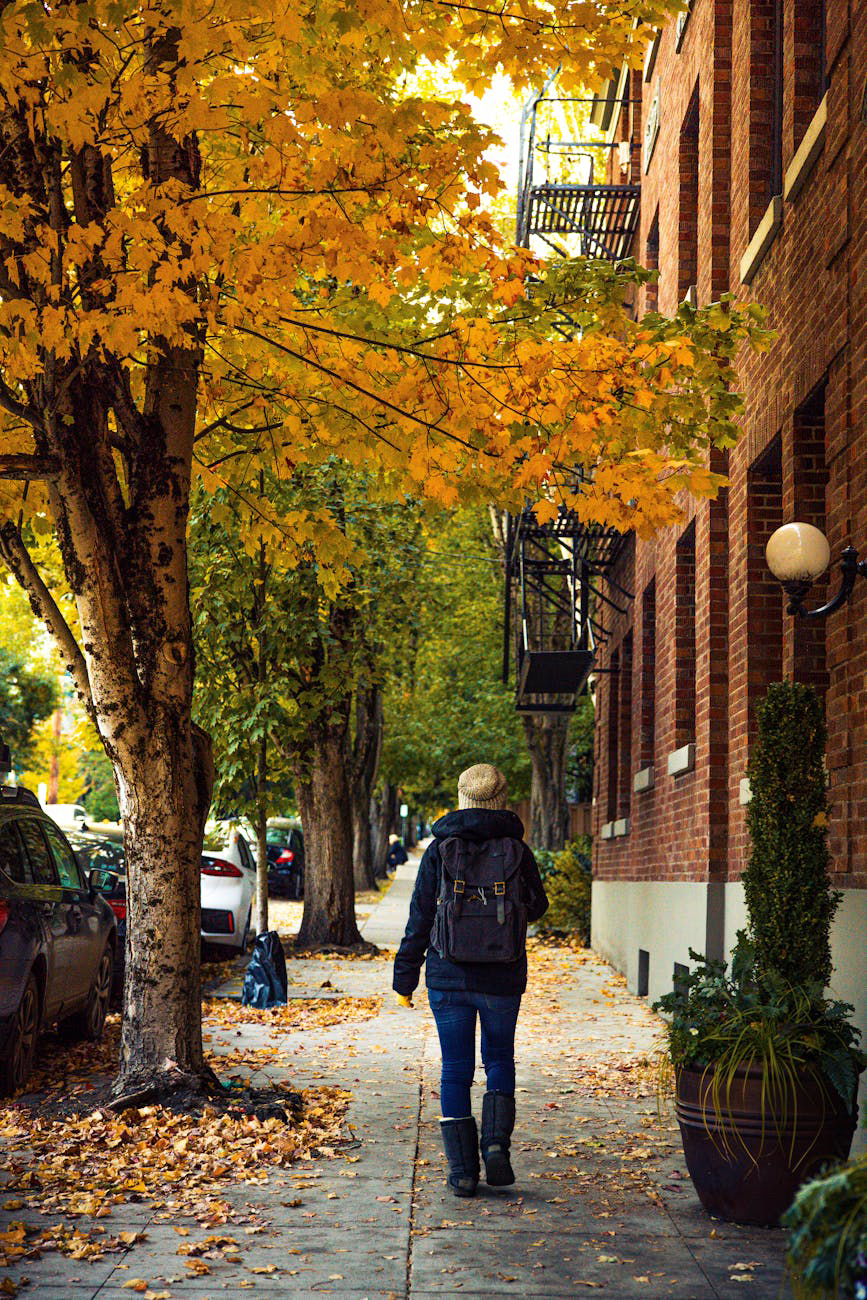
Portland in November smelled like bigleaf maple leaves coming apart in the gutters along Burnside. Wide yellow leaves gone brown and soft underfoot. Exhaust and oil from TriMet buses running early morning routes. Like the Willamette doing whatever it does when the sky sits low and the clouds won’t let the sun in. She unlocked the front door and stood in the doorway a moment before going back inside. She left the lights off a few minutes longer than necessary. There was something about the shop in the gray light. She liked that. Buckets of stems lined both walls. The cold case humming. The silence of flowers. She smiled, pulled her sleeves down over her wrists, and got to work.
Amber had run Cornerstone Floral eleven years. Long enough to know which customers wanted to talk and which ones didn’t. Long enough to know that most people bought flowers when it mattered, a birth, a death, an apology words couldn’t carry. She was good at her job. She knew what was needed. That was the whole of it.
The thing she was really good at? Reading the need. Looking beyond the order. Amber knew when a man called asking for something cheerful, I don’t know, whatever you think he was looking for forgiveness and didn’t know how to say so. She gave him ranunculus and a single stem of something deep red and sent him on his way. Another customer, a woman, stood at the counter and described exactly what she wanted. Color, variety, arrangement, price. All calculated down to the penny. Amber knew she was asking to be seen, to have someone take her seriously. Amber did. Flowers were rarely about flowers. She just tried to translate it right.
The ban became federal law nine years ago. She, like most of the Pacific Northwest, didn’t think about it. Most people didn’t. Amber knew not to ask what had been taken or why, because the asking drew attention and attention was the one thing you could not afford. Some claimed to have seen the book, the way people claimed to have seen other impossible things, said in low voices, in private, with the shame of someone admitting they wanted something they weren’t supposed to want.
She sold flowers. For Amber that was more than enough.
Today though, she stood at the worktable longer than usual, holding a stem of eucalyptus, thinking about her mother when the shop was quiet. Her mother died six years ago leaving an absence. Not just the missing of her, but the missing of what her mother might have told her.
Her mother believed in something after. Quietly, without demanding agreement. She had taken Amber to church as a child and Amber had gone without argument, coloring in the pew, half-listening, absorbing the music without knowing she was absorbing it. The pastor’s voice coming and going like weather. She stopped going in high school. Her mother never pushed.
Amber believed in something. Vaguely. That her mother was somewhere. That the people you loved didn’t simply stop. She couldn’t have defended it and didn’t try. It was less a conviction than a preference, the way you prefer a thing to be true without being able to prove it.
There were questions she had never thought to ask while she still could. She didn’t even know what the questions were. She only knew that something in her life had no floor, and that her mother might have known where to find one, and that she had run out of time to ask.
She set the eucalyptus down. You could not grieve what you did not know you had lost. But you could feel the shape of it.
What she did remember was something her mother had said the last good afternoon they had together, sitting at the kitchen table with coffee going cold between them. Her father had been dead four months. Her mother had looked out the window and said: He’s real, you know. Not like a story. Real like a person. Realer, maybe. She had smiled and let it go, the way you let a thing go when you think there will be more time.
There hadn’t been more time.
The stranger had said something similar, now that she thought about it. Three weeks ago, maybe four. A man she had never seen before and hadn’t seen since, who came in for a single stem of something white and paid in cash and was almost out the door when he turned back and said: He died for you, you know. Wanted you to know that. Then he left. She had filed it away the way you file things that arrive without explanation, and moved on.
She thought about it now.
The book arrived at half past seven, tucked inside a paper bag left on the back step with an order slip rubber-banded to the handle. She had propped the rear door open for the delivery truck and the alley came in with her when she stepped back inside, wet asphalt, diesel, the faint copper smell of standing water in the gutter. Arrangement for a memorial service. White lilies, eucalyptus, something simple. The bag held the book and a note that said only: please.
She brought it inside and set it on her worktable.
It was old. Cloth cover, black, worn soft at the corners. No title on the front. She turned it over. Nothing on the back either. She opened it carefully, without assumption. The pages smelled like a long time ago, like something kept in a drawer and not forgotten exactly, just set aside.
The paper was thin. Thinner than she expected. The print was small and ran in two columns and she didn’t recognize any of it. Whatever language this was, whatever system, she had no frame for it. She turned pages. More columns. Numbers running alongside the text like addresses, or coordinates.
She didn’t know what she was holding.
She was still looking when she felt the folded paper between the pages near the back. She pulled it out and opened it flat on the worktable.
A list of names. Handwritten, in ink that had dried to brown at the edges. Forty, maybe fifty names. She started reading.
Her mother’s name. Third line from the top.
She stopped.
Her mother had been dead for six years. He’s real. Realer, maybe.
She read on.
Carla. Her Tuesday regular, who came in every week for whatever was in season and always paid in exact change and once, while Amber was wrapping dahlias in brown paper, had said without looking up: I don’t know how people do it without him. I really don’t. Amber had smiled and assumed she meant a husband or a doctor or some other practical thing. She understood now that she had assumed wrong.
Her neighbor Denis. Who waved from his porch every morning. Who had said to her once, when she mentioned she hadn’t been sleeping well: I’ll pray for you. Just that. She had thanked him and moved on, the way you do. His name sat on the list in the same careful hand as all the others.
Her brother Randy. She had not spoken to Randy in three months, not since the argument about their mother’s things, but she saw his name and heard his voice the way you hear voices when you haven’t made peace yet. He had called her, maybe two years ago now, and said: I’ve been going to this thing on Sunday mornings. I know that’s not your deal. But it’s been — I don’t know. Something’s different. She had changed the subject. She had been good at changing the subject.
She paused on Margaret Flood. Her mother’s friend. They had gone somewhere together on Sunday mornings, Amber had been young enough that she never asked where, old enough now to remember the particular quiet her mother carried home afterward. Margaret had come to the funeral and held Amber’s hands in both of hers and said: She knew where she was going. She wasn’t afraid. Amber had nodded because that was what you did. Now she stood at the worktable wondering what exactly Margaret had meant, and why she had never wondered it before.
She just hadn’t had the eyes for it.
She got to the bottom.
Her own name. Amber. Nothing else. Just the name, in the same careful hand as all the others.
She looked at the name. She looked at the book. She looked at the name again.
She set the list down.
Everyone on it was tied to this book. Her mother. Randy. Margaret. Carla. Denis. People who had nothing to do with each other except her, and now this.
Why is it so important, she thought. What did they see that I’m missing.
The bell above the door rang.
She looked up.
A man stood just inside the threshold. He was simply there, the way a person is there when you look up and find them. He wore ordinary clothes. He didn’t look around the shop the way customers did, taking in the buckets and the cold case and the price cards. He looked only at her. Still in a way that had nothing to do with waiting.
He said her name.
Not excuse me. Not are you open. Just her name. The way you say a name you have always known. Not introduction. Recognition.
Amber.
She did not ask how he knew it. She did not ask who he was. She already knew, not from evidence, not from argument, but from somewhere underneath both, where something either rings true or it doesn’t.
She knew who had written her name on that list, and when, and why it had taken her this long to find it.
The book sat on the worktable between them. Outside, Portland moved through its morning. A bus moved through the intersection. The smell of exhaust came briefly through the gap under the door and dissolved. The cold case hummed. The flowers held their color in the gray light.
Amber set her hand on the book.
She said: I don’t know who you are.
He smiled, nodding.

Leave a comment