“Go help pack up the gear. Here’s the key. Do whatever George asks you.”
Simple enough.
Our mission? That’s simple too. Shoot video of a language community who is hearing Jesus speak for the first time, in an area where the message of Jesus remains unknown. Today they watch and see Jesus speak in their own mother tongue. But not everyone is celebrating.
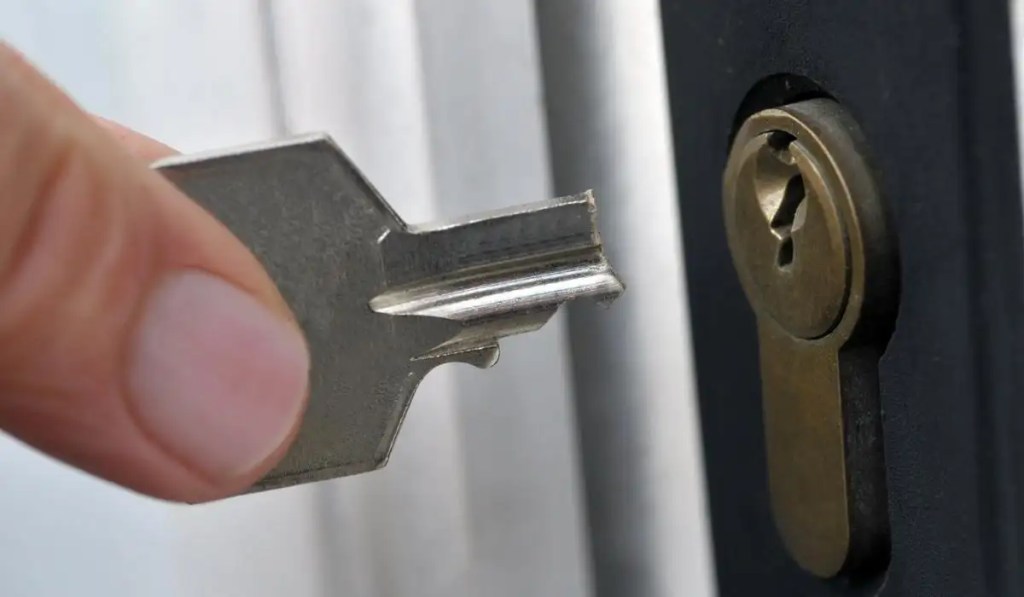
I find George, grabbing three camera bodies he’s not using, and three lenses. I walk to the back of the LandRover, stick the key in the lock, turn it, watching half of it stay, deeply embedded in the slot. The piece in my hand? It’s not long enough now to start the truck. The piece stuck in the lock? It’s too small to get it out.
George continues shooting B-roll footage and I’m dumbfounded, staring at the broken key. Villagers outside the farm gates are getting louder, their shouts sharper, angrier. They waited outside during the film, ready to pounce if anyone tried to leave. Now the credits have rolled and we’re still here, trapped behind a fence with equipment we can’t pack.
“Everything okay?” George asks without looking up from his viewfinder.
“The key broke.”
“Broke?”
I show him the piece in my palm.
“That’s not good.” He keeps filming. “Let Samuel know.”
I find Samuel, our local host and driver, talking with the farm owner near the gate. The crowd outside is growing, doubling in size. Now more than fifty people, some with flashlights, others with cell phones held high, chant, curse, and scream for us to come out. These little dots of light look like fireflies across the darkening field.
“The key broke in the lock,” I tell Samuel.
He looks at the LandRover, then at the gate, then back at me. “Okay. We fix. No problem.”
“How?”
“We fix,” he says again, walking toward the truck.
Our team gathers around the LandRover while Samuel and six men study the broken lock. The Americans stand in a loose circle, useless.
“Maybe we could call someone?” our media director suggests.
“Who would we call?” I ask.
“A locksmith,” he chuckles.
American ingenuity, all of us talking through the problem, looking for an American solution.
“What about breaking the window?” another teammate offers. “Then we could hotwire it.”
David, our team leader spoke softly. “This is not your truck. And it’s not your country. Or your culture. So we wait.”
Watching Samuel and the other nationals work at getting inside the truck without damaging it? It was frustrating.
“Nothing we say or do will help. It’s not our place.”
So we wait, watching the sun drop fast. One minute there’s enough light to see faces in the crowd. The next minute, only smoke from fires burning trash, and smoldering plastic can be seen. Oh, and those dancing phone lights. The chanting is rhythmic. More and more angry with each second. I don’t understand the words. But their tone is crystal clear.
George stops filming. “They’re not going to let us just drive out of here, are they.” It’s a matter of fact statement. I wonder if he’s ever said it before.
“No,” David says. “They’re not. Even if we get the truck started.”
I watch Samuel work. They’ve tried prying the key out with a knife. That didn’t work. Tried drilling around it. No dice. Tried forcing the ignition to turn anyway. Nothing is working. They don’t ask for our advice. We don’t offer it.
An hour passes. Then two.
“We should pray,” David says.
We form a circle near the truck, six Americans in the growing darkness. We pray for safety. For wisdom. For Samuel and his team. We pray that God would make a way where there is no way.
When we finish, the broken key piece is still in my hand.
Samuel appears from the darkness. “We send for another vehicle. Different gate. You go quiet.”
“When?” David asks.
“Soon. You wait.”
We wait in the field. It smells like diesel fuel, remnants of fertilizer and dirt and dust. I can hear the crowd but none of us can see them anymore. Can’t see the phone lights or the smoke or Samuel working.
“I broke the key,” I say to no one in particular.
“Keys break,” David says. “It’s not your fault.”
“Feels like my fault.”
“That’s because you think you should have been able to prevent it. Or fix it. Or do something about it. But this whole thing? None of it’s ours to fix.”
A Sprinter multi passenger van arrives ninety minutes later. Nineteen-passenger seats plus the driver. The van, lights off, engine barely running. Samuel opens the doors, ushering us toward it.
“Now. We go. Quiet. Leave everything.”
We load up in darkness, six Americans following Samuel. The Sprinter is idling twenty feet away. We climb in without a word. The driver doesn’t wait for us to sit before pulling away. No headlights. Just the faint glow of the dashboard and the road disappearing behind us.
The crowd never sees us leave. They’re still at the front gate, waiting for a LandRover that won’t start, guarding against an escape that already happened.
I pull the broken key from my pocket. Half a key. Useless for starting anything. But it bought us time, forcing us into powerlessness. It made us wait while Samuel and his team found a better way. Their way, not ours.
Sometimes a broken key teaches you that your solutions don’t work everywhere. That staying quiet and letting others lead saves lives. That the toughest battles are won in your heart when you finally admit you can’t fix everything.
One broken key saves lives that day.
Not because it works.
Because it doesn’t.

Leave a comment