Fingers poised above the keyboard, ready to click away the response I’ve been rewriting over and over in my head. It’s the perfect response. A takedown of epic proportions! And all I have to do is hit the enter key.
Then, in the time it takes me to blink, I stop, think twice, and choose not to send it, deleting my carefully crafted creative comment.
This is the point where I get to choose.
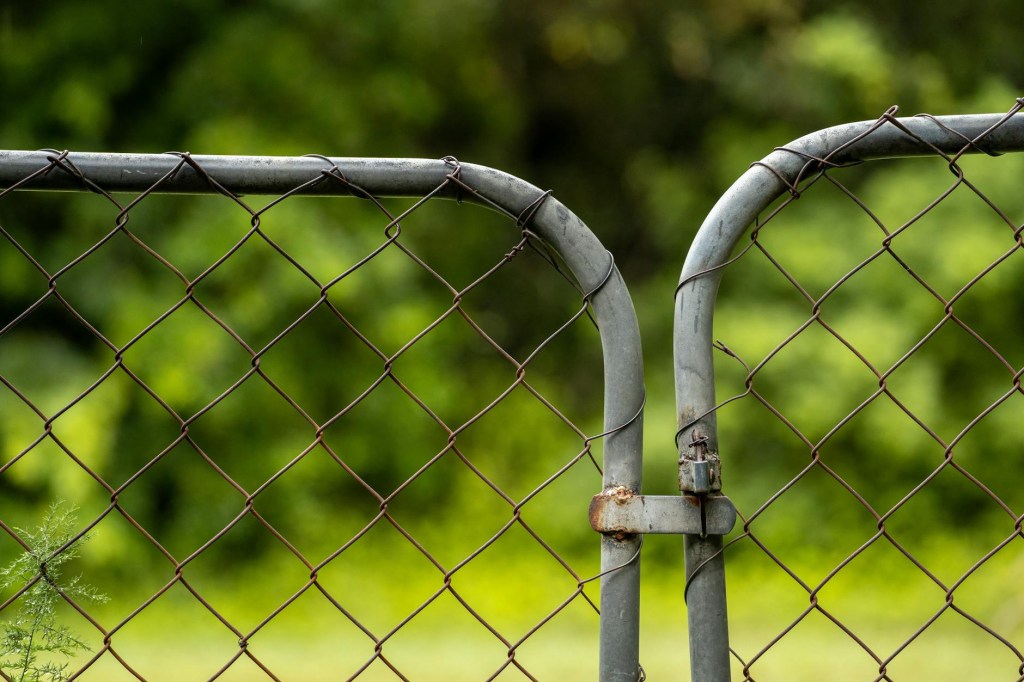
A decision gate.
Go through? Open it and then slam it shut? Or leave it closed?
What if the fight is the point? Not the issues. Not the policies. Not who’s right or wrong about taxes or immigration or any of the thousand things we’ve drawn battle lines around. What if it’s the fight itself? The anger, the division, the way we’ve stopped seeing each other as people. What if that’s exactly what someone wants?
The moment you’re scrolling through social media and one post, just one, makes your blood boil! An outrageous claim. An inflammatory statement from someone you usually agree with, just not this post. The point is always the same. Get you to respond, lash out, or attack. Add fuel to the fire. Ask questions AFTER you attack. Not before.
That’s the gate. And each time I’m standing there, trying to decide the right thing, I wonder what would happen if I didn’t walk through it.
Because I used to. Oh, I didn’t just walk through. I threw it open with both hands, letting it hit the other side so hard you’d think it was going to break off.
Once, a long time ago, I had a friend. He was someone who I knew didn’t agree with me on, well, pretty much everything, including politics. He called me an idiot for believing the way I did, and it was people like me who made it harder for people like him to give away money, because we were just forcing him to pay more taxes. Because of me, our country was going to hell. In turn, I gave him facts, not rhetoric, about his political candidate’s shortcomings, highlighting his fractured moral compass.
We both walked away feeling righteous, losing something we’ll never get back.
Our friendship.
Neither of us changed the other’s mind. What we did prove is that the other side is just as bad as we suspected. Evidence for the other side’s worst assumptions. We were the reason the other side had fuel. But neither of us saw it that way.
And somewhere out there, someone was counting on that.
I don’t know who, exactly. Maybe it’s the algorithms feeding on engagement, learning long ago that anger keeps us scrolling longer than joy. Maybe our leaders need enemies to fight more than they need peaceful solutions. Maybe it’s just the ugly part of human nature that would rather be right than connected. Like it or not, someone out there benefits when families stop talking. Somebody wins when neighbors become strangers. Profits are being made, all from this hatred.
Posts no longer persuade. They infuriate. Dressed in political discourse, it’s a wolf in sheep’s clothing; a psychological attack. And the second I pick up a brick, or a rock, or a stone to throw, they get all of it. My energy. Attention. My inner peace. I’m seated at the poker table, chips all in. The only problem with this game? The house ALWAYS wins.
So I’ve started doing something different. I don’t walk through.
Some days it feels like freedom. Most days it doesn’t.
I want to be honest about that. It feels like letting them win. There’s a voice saying I’m being a coward, that people are getting hurt, and I’m too scared to stand up for them. The shame is so real. What kind of person watches the fight and does absolutely nothing?
Shame is a liar.
So are our feelings.
Fear tells us something is dangerous when it’s just unfamiliar and uncomfortable. Anger tells us we’re righteous when we feel hurt. And shame? Shame tells us we failed when we actually held the line. What I feel for not fighting is old programming, tribal wiring, the idea that loyalty must fight, and the belief that silence equals betrayal.
Refusing to add fuel to the fire means not letting the fire burn me.
So, what if the peaceful response is the most loving thing I can do?
Not peace as passivity. Not looking away from injustice. But peace as an interruption, refusing to let my response become another weapon someone else picks up. The division wants me to play. Every time I don’t, I stop the pattern from repeating. I break one link in a chain that stretches from my screen to someone else’s screen to the Thanksgiving table, where two people who used to love each other now sit in silence.
There is no shame in that, even when it feels like there is.
My tongue can heal or hurt. I’ve seen what healing looks like. A word at the right moment. A question instead of an accusation. Silence that makes room for someone else to breathe. That’s a pretty big responsibility. And we’ve all got it.
Which means I’d better be quick to listen and slow to speak. Not silent. Slow. There’s a difference. Slow means I take in before I put out. Slow means I let the other person finish. Slow means my first instinct doesn’t get to be my final answer.
I think about that verse in Philippians, the one about letting go of pride-filled opinions because they harm our unity. I used to read that as instruction. Now I read it as a warning. That pride is what storms through the gate. That pride turns neighbors into enemies.
I still have convictions. I still vote. I still care about justice, truth, and the kind of country I want my kids to grow up in. But I can hold those convictions without using them as weapons. I can stand for something without standing against someone.
The decision gate shows up every day now. It’s in my pocket, buzzing with notifications, offering me endless opportunities to be right in public. And every day I have to choose: Do I walk through? Do I add my voice to the noise? Do I become another soldier in a war that has no winners?
Or do I stay here, on this side of the gate, and use my voice for something better?
The shame still comes. It probably always will. But I’m learning to recognize it for what it is. It’s the last weapon the pattern has, the last tool to get me to fight. And it makes me feel terrible for not fighting. Either way, it feels like it wins. Unless I name it. Unless I say, ‘I see what you’re doing.’
Peace sometimes feels like failure because we’ve been taught that war is the only form of participation. But what if the bravest thing isn’t to fight? What if it’s to choose, deliberately and intentionally, how, when, and why I speak?
I don’t have this figured out. I get pulled toward the gate, same as you. I feel the tightness in my chest, the urge to respond, the righteous anger that wants to be heard. I’m not writing this from some enlightened place where none of it touches me anymore.
I’m writing this from the gate itself, one foot on each side.
And I’m pretty sure I know which direction leads home.

Leave a comment