Pledge wood cleaner. The scent of lemon washed over Marla the second she stepped through the church doors. A sharp citrus scent and underneath it, something much older, mustier, harder to scrub away. Old hymnals. Wool carpet. The smell ancient churches accumulate whether they want to or not. It’s a smell Marla notices because she wonders why any place would work this hard just to feel clean.
She was late on purpose. Late meant fewer eyes tracking her entrance, fewer questions wrapped in concern, fewer smiles landing like interrogations instead of curiosity. Marla sat in the last pew just as the final verse of the last worship song dissolved into scattered amens, clapping, and the rustle of people settling in for the sermon.
Today, the sanctuary gleamed, the smell of fresh white paint still lingering in the air, covering the walls, the trim, and even the wooden cross behind the pulpit. Now even the cross’s grain was dark, popping out from beneath the new coat. Bright. Cheerful. Scrubbed of any imperfections that might unsettle those attending.
Marla folded her bulletin, balancing it on her knee. She wouldn’t read it. She already knew that. But holding something helped her feel less vulnerable.
She came today for one reason: Marla wanted to know if she was wrong about Jesus.
Not in the academic sense, but wrong in the maybe-I-missed-something. Wrong when the alternative feels permanent.
The young pastor stood, clearing his throat. Sleeves rolled. Beard trimmed neat. When he announced the Scripture reading, and the verse number appeared on the screen overhead, something in Marla’s chest tightened.
Matthew 23.
She’d heard this before. Read it in the comment sections. Seen it weaponized.
The pastor’s voice stayed steady, practiced. But when he reached specific phrases? That’s when his tone sharpened, like he’d underlined them during preparation and wanted the congregation to hear his yellow highlighter.
“Woe to you, teachers of the law and Pharisees, you hypocrites! You are like whitewashed tombs…”
Marla flinched before she could stop herself, doing her best to shrink into the pew.
Her jaw clenched. The word tomb echoed off the fresh white painted walls, but that wasn’t what stuck. What stuck was what someone told her it really meant: that Jesus chose language designed to humiliate. Something disposable. Unclean. A word that shrinks you long after you’ve forgotten the sentence attached to it. When she first heard it, she believed it. Marla owned it. Not because she’d checked sources or cross-referenced scholars. Because it fit her own personal narrative.
In the pew, Marla remembered a youth pastor pulling her aside after he heard about her divorce. He told her she’d become “a distraction,” and he thought it best for her not to serve in children’s ministry. Not until she ‘got right,’ with God.
It also fit the women’s group Marla was part of, which had stopped texting her about their Sunday brunch meetings. It lined up with the youth pastor, making her wonder what she had done wrong. Kindness in the church always seemed to carry an expiration date, valid only as long as she kept performing and serving. She questioned all of it.
And if Jesus, as the pastor was saying, turned out to be cruel? At least that would explain everything. It would line up with her own story.
His sermon moved forward with historical context, warnings about religious performance, and an application for our lives today. But Marla? She was still stuck on that image. Whitewashed. Painted over. Made presentable from the outside.
Marla stared at the walls around her, wondering how many coats it took to look like that.
The pastor’s final prayer ended with the traditional ‘amen.’ People stood, gathering in clusters, trading easy laughter, bouncing off the white walls. Marla stayed seated, head bowed, just long enough for the center aisle to clear. This wasn’t her church, and she wasn’t hiding. She just needed all the noise to thin out before she could move.
Near the back wall, an older man was stacking twelve metal folding chairs, lifting them two at a time with the slow confidence of someone who’d done this a thousand Sundays. The chairs were for overflow. Just in case the pews were full. He wore a faded denim shirt and work boots, ones that had seen actual work. Above the left pocket, Marla saw his name: Ray.
Ray glanced up, smiling at Marla as she passed.
“Hard passage,” he said, continuing to move the chairs.
Marla stopped, unsure why she did. Maybe because Ray didn’t phrase it as a question.
“Seems kind of harsh,” she answered.
Ray rested his hands on the back of a chair and leaned into it slightly, like a man settling in for a conversation he didn’t need to rush. “Yeah. But that’s only if you think he’s talking to you,” he winked.
That statement landed heavier than Marla expected.
She waited for an explanation. Ray didn’t give one. He just stood there, smiling, giving her space to process what he said.
“My brother’s buried up on County Road B,” Ray said, after letting the silence breathe. “Small cemetery. Way too easy to drive right past, especially if you don’t know it’s there.”
Marla blinked. “I’m sorry. Were you two close?”
He waved his weathered hand, gentle, smiling. “It’s okay. It was so long ago. But his headstone? Now that’s something else. It’s white marble. Did you know they keep it that way on purpose? Always have.”
Marla looked at him, puzzled. “The marble I can understand. But why white? I assume it would get dirty over the years, wouldn’t it?”
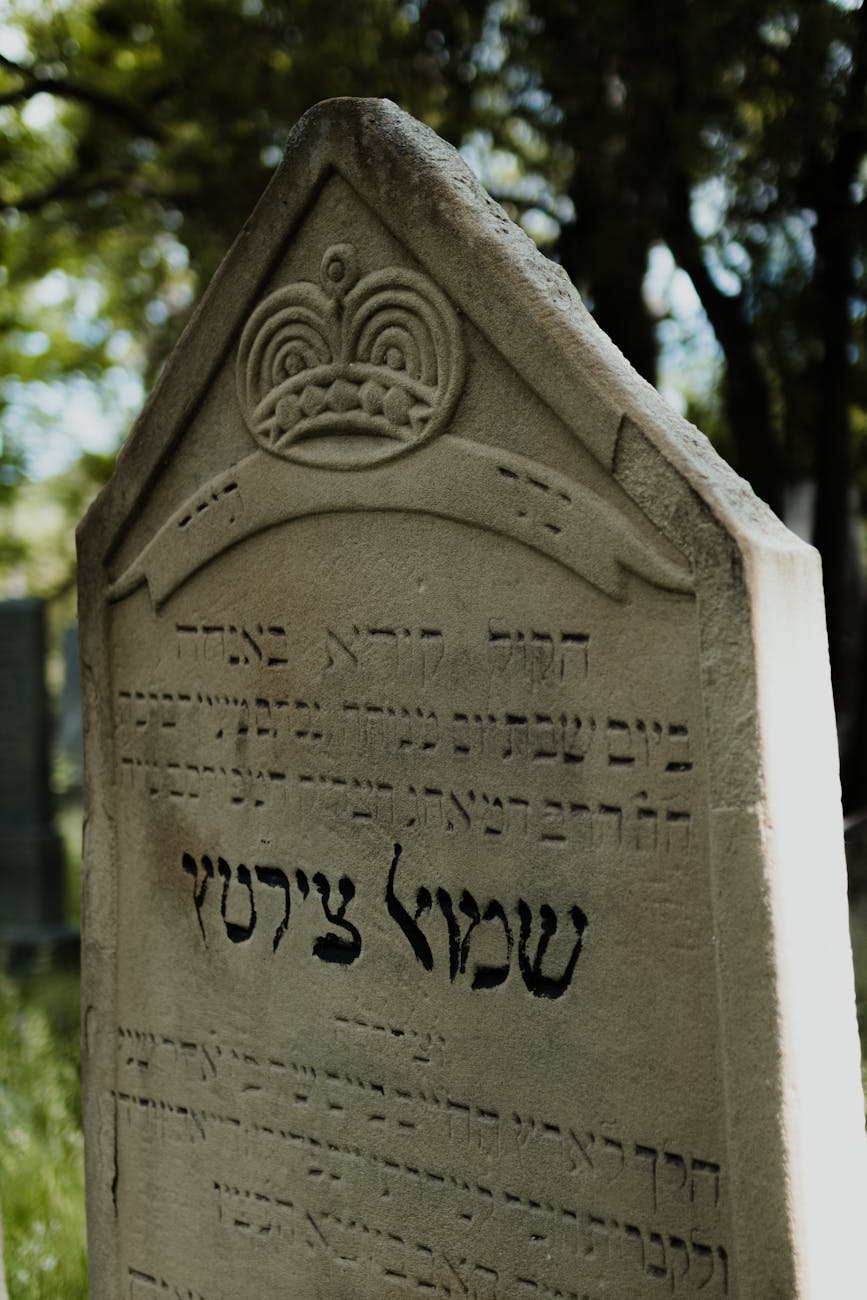
“Sure would,” Ray chuckled. “But white was also a warning,” Ray said. “Long before Tommy died, like during Jesus’ day, if you touched a grave, you were ritually unclean. It’s something all Jews followed. If you did touch a grave? You couldn’t enter the temple. And you weren’t able to sacrifice or participate in worship. For protection, they painted all the gravestones white, making them visible from a distance. That way, no one would touch them. It wasn’t for decoration, mind you. White was for protection.”
“Thing is, Jesus wasn’t calling anyone trash,” Ray continued. “He was calling certain people dangerous. The ones who looked safe, but really weren’t. The ones who made others feel unclean just for standing too close to them.”
Marla swallowed. “So… not everyone.”
Ray’s mouth curved, just slightly. “Only the ones blocking the door and calling it ‘holiness.’”
Marla thought of all the doors she’d backed away from over the years. The ones she’d been told were closed for her own good. The ones she’d assumed she was never supposed to and not permitted to open.
“I thought Jesus hated people like me,” she said. The words left her mouth before she could decide whether to let them.
Ray shook his head. “Jesus flipped tables. For people just like you.”
She laughed. It was a short, startled sound that felt unfamiliar in her own throat. “Doesn’t that still count as harsh?”
Ray shrugged. “Depends where you’re standing, I guess,” Ray unfolded a metal chair, settling into it. “If you’re the one selling access to God? Absolutely. But what if you’re the one trying to get in? If that’s true, then that anger isn’t directed at you. That’s someone clearing the way, making a path for you to come in.”
Marla nodded slowly. She didn’t have a response and wasn’t sure if one was needed.
Outside, the afternoon sun lit up the front of the building, making it glow. The church appeared clean. Quiet. Peaceful. Inviting. Almost perfect. From the sidewalk, at least.
Marla stood there for a moment, keys in her hand. Then she walked past it. Not away from the building. Just past it. Toward the parking lot. Toward the open sky beyond the steeple. Toward the possibility, still unfamiliar, still fragile.
The afternoon air smelled like cut grass and warm asphalt.
And for the first time in longer than she could remember, Marla didn’t feel like something that needed to be thrown away.

Leave a comment