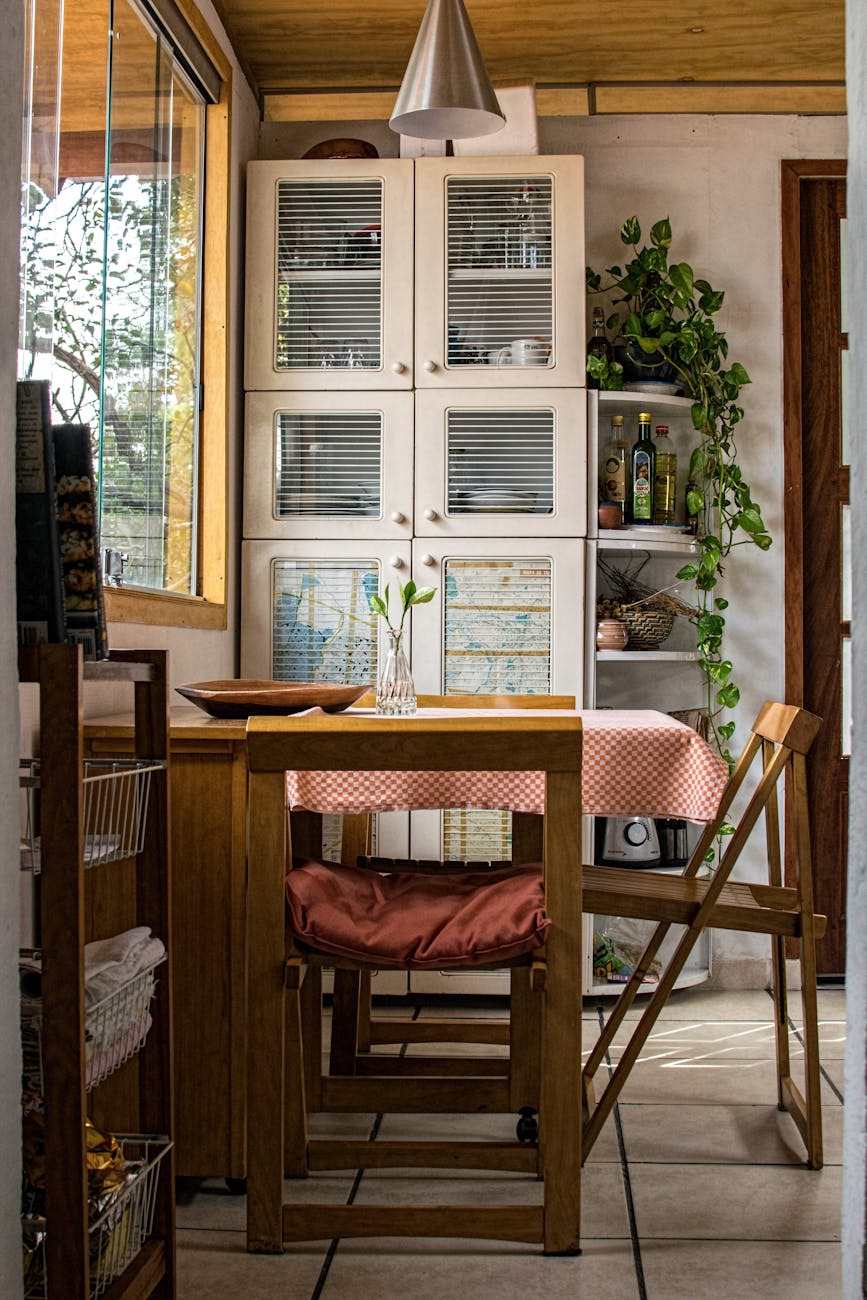
Margaret sits across from her best friend Elena in Elena’s kitchen, smelling both the hot cinnamon rolls and the fresh-brewed coffee. Twenty-five years of marriage, and it comes down to this. A Tuesday morning, sitting at Elena’s worn oak table. Alone in her car, she practiced these words. They’re tougher to say out loud to her friend.
“I’m leaving David,” she says. The statement is emotionless, flat.
Elena sets down her mug. Doesn’t gasp. Doesn’t ask if she’s sure. Just waits.
“I kept trying,” Margaret says, crying now, not the loud kind, just tears that won’t stop. “Elena, I tried everything. I wrote him letters, actual handwritten letters, because he refused to talk to me face-to-face. I asked him to go to counseling four times. Four different therapists’ names and phone numbers I scribbled on sticky notes. I left them on his desk. I sat him down three different times and said, ‘Something is broken in our marriage. Can we fix it?’”
She scrubs her eyes with both hands.
“And you know what he said? Every time I brought it up? ‘I don’t see a problem.’”
Elena reaches across the table. Taking Margaret’s hand, she squeezes it.
“But the worst part? To everyone else? Oh, we’re fine. Perfect, even. At church, at parties, he’s charming. Mr. Wonderful. He tells stories about us, puts his arm around me, and laughs at all the right moments. Our friends think we’re a solid, happy couple. But the second we get in the car, the second we’re alone, he’s silent. Or worse. He’s cold.”
“He’s performing,” Elena says, patting her hand.
“For twenty-five years.” Margaret’s voice breaks. “And you know what happens when I try to tell our friends, people we know from church? They’d look at me like I was crazy. ‘But David’s so great! He’s so attentive!’ So I started wondering if I was the problem. If I were just imagining things.”
She picks up her coffee, hands shaking slightly, as she takes a small sip. “I made lists, Elena. Actual lists of things I needed. Small things. ‘Ask me about my day.’ ‘Tell me when I hurt your feelings instead of shutting down for three days.’ ‘Go to dinner with me once a week.’ You know, basic marriage stuff. The things that keep your relationship alive. To make it easier for him, do you know what I did? I numbered them, prioritizing them. I did my best to make it as easy as possible.”
“What happens with your lists? Did he do anything with them?”
“No. I think David might have glanced at them, once, nodding like he understood. But then, and this is the part that made me feel insane, he’d tell me I never communicated clearly enough. That I was expecting him to read my mind. And I’d remind him, ‘David, I gave you a handwritten list.’ But, of course, I was remembering it wrong, because the conversation never happened that way.”
Margaret stands up and starts pacing. “I scheduled dates, Elena. I’d text him on Tuesday: ‘Friday night. Just the two of us. Let’s go to Antonio’s, that Italian place you love.’ He’d say yes. Then Friday would come, and he’d have some reason not to go; work ran late; he’s tired; how about next week? But two days later, he’d tell Mark and Susan in our small group about this great date we went on. Just… make it up, you know? And they’d smile at me like, ‘You two are so cute.’ And I’d sit there thinking, ‘Am I losing my mind?’”
Elena doesn’t answer. Just holds space for Margaret.
“I read all kinds of books about communication, marriage, and relationships. You remember that marriage workshop at church I went to alone? All because he had to work on that Saturday? Then I took that twelve-week class on emotionally healthy relationships. Every Tuesday night for four months, I’d come home and try to share what I learned. He half-listened while scrolling through his phone.”
Margaret comes back, sitting down hard in her chair. “I even took an emotionally healthy spirituality class in the fall. What if I could understand myself better and understand what a healthy relationship with God looked like? Then maybe I could figure out how to fix our marriage. I learned about boundaries, about speaking truth, about not enabling dysfunction. The same stuff I learned in the first class. Only I started growing spiritually, just like I had grown emotionally.”
“Then things changed for you and David, right? With all these tools you had, he saw you change. Didn’t he?”
“No, but I started seeing our marriage clearly, probably for the first time. I was doing all the emotional work for both of us. Making excuses for David. Covering for him. I even pretended everything was fine when it obviously wasn’t. Not for me, anyway.”
Margaret starts fiddling with the handle of her mug. “I reached out to some of our dearest friends, like you and Harrison. Couples we’ve known forever. I asked, ‘Can you talk to David? Can you help me?’ Three couples went silent, ghosting me. And stopped returning my calls. Jeni, Heather, and Samantha? They told me every marriage has problems. Jeni said that I should be more patient. Heather and Samantha? They said I needed to forgive more, love David more. It’s like I hadn’t been patient for two decades! Or tried. My closest friends shut me out.” She sipped her coffee. “Except you, of course, Elena.”
Her voice hardens. “And David? He told his version of our story before I could. To everyone. I’d show up at church and get these looks: half pity, half judgment. Because he’d already told them I was struggling, that I was going through something, that he was being so patient with me. He made himself the long-suffering husband and me the difficult wife.”
Margaret wipes her eyes.
“I told him, ‘I hate it when you walk away mid-conversation, because it makes me feel like I don’t matter.’ I used ‘I’ statements, stayed calm, and did everything the books and classes taught me. And do you know what he said?”
“What?”
“‘Why are you attacking me? Why do you always criticize me? I can’t do anything right for you.’” Margaret’s laugh is bitter through her tears. “I’d spend an hour carefully explaining my feelings, trying to make it safe for him, and he’d turn it into me being the aggressor. Every. Single. Time.”
She can’t sit still and starts pacing. “Last month I tried one more time. Wrote David an email because at least then he couldn’t interrupt or tell me later I’d said things I didn’t say. I laid it all out, every attempt I’d made, every time I’d asked for help, every promise he’d broken. I said, ‘I need you to fight for this marriage. I need you to show me you care enough to try.’”
“What did he say?”
“He said I was being overly dramatic. That every marriage has problems, and I was making a big deal out of nothing. He actually said all those classes I had taken had ‘put ideas in my head.’ Like learning about emotional health was the problem instead of his refusal to practice it.”
Margaret stops at the window, looking out into Elena’s backyard, watching three cardinals flit between various bird feeders. “But the thing that broke me, Elena? The thing I just can’t get past?”
Elena waits.
“David’s brother, Mark.”
“Is he the one who blew up your Thanksgiving last year?” Elena asks.
“Exactly. Mark’s been awful to his wife for years. Controlling, demeaning, just cruel sometimes. Everyone knows it, but nobody says anything because, you know, family. At Thanksgiving, Mark said something so nasty to Linda at the dinner table that she ran out crying. So I pulled David aside and said, ‘You need to talk to Mark. Tell him that’s not okay.’”
“Did he listen to you?”
“No! David said it wasn’t his place. That Mark was doing the best he could, that marriage is hard, that we shouldn’t judge. And when I pushed? When I told him Mark’s behavior was actively hurting Linda, and we had a responsibility as extended family to say something? David got angry with me! Told me I was being self-righteous and unreasonable. That I didn’t understand the whole situation and misread what Mark said to her.”
Margaret turns to face Elena, tears streaming now. “He defended Mark. Protected him. Made excuses for his bad behavior. David knew. He knew it was wrong. And right then, I realized if David won’t hold his own brother accountable for hurting someone, he’ll never hold himself accountable for hurting me. If he can watch someone damage their marriage and call it ‘not his place,’ then he’ll never see what he’s doing to ours.”
“That’s when you knew,” Elena whispered.
Margaret nodded. “That’s when I knew. Because it wasn’t really about Mark. It was about David’s approach to our relationship. He protects the status quo. He defends the comfortable position. He’d rather enable harm than risk conflict. And I’m married to someone who will defend dysfunction rather than fight for health.”
She comes back, sitting at the table. “But I’m still scared, Elena. Terrified, actually. I keep thinking, what if I’m wrong? What if I’m giving up too easily? What if I’m the problem and I just can’t see it? What if God’s disappointed in me for not trying harder?”
“Margaret.”
“I know, I know. But twenty-five years, Elena? That’s not nothing. And everyone’s going to have an opinion. They already do. David’s already told his version. By the time I walk out that door, half the church will think I’m having a nervous breakdown. The other half will think I’m selfish, unwilling to do the hard work of what marriage is.”
“So you let them. Let them think it. You know the truth.”
“Do I?” Margaret looks at her friend, her eyes bloodshot red from crying. “Some days I’m so sure. So certain. I can see it all clearly. Everything that’s happened, and David’s refusal to engage. But then I’ll remember something good, some moment when he was kind, or we laughed together, and I think maybe I’m exaggerating. Maybe I’m being too harsh with him.”
Elena doesn’t label what David did. Just says, “You’re remembering what you needed to remember to survive it.”
Margaret closes her eyes. “I did everything. I showed up every day. I communicated clearly, honestly, desperately. I read the books and took the classes. I wrote the letters and scheduled the dates. I learned the tools and tried to use them. I reached out for help. I needed a partner. I needed someone who’d fight for us when things got hard. And when I told him that, when I begged him for that, he just. He didn’t. He chose not to. And then he chose to defend that choice. To defend dysfunction rather than pursue emotional health.”
“So you’re choosing you, Margaret.”
“I’m choosing to stop dying.” Margaret breathes deep, steadier now. “I wake up every morning and try to convince myself it’s enough that we’re polite. That we function. That we look good to other people. But it’s not enough, Elena. I want to be known. I want to matter to someone I matter to.”
She walks back to the window, staring at the birds. “David will tell people I just left. That it came out of nowhere. That those church classes filled my head with nonsense, made me selfish and demanding. He’ll play the victim in our story, the good man whose wife abandoned him for no good reason. And people will believe him because that’s the version they already know.”
“The people who matter will ask you what happened.”
“Can I even trust my own version anymore?” Margaret turns to face her. “Can I trust myself that this is what happened, after someone tells you your reality isn’t real for twenty-five years?”
“Then write it down,” Elena says. “Write down everything that happened. Every conversation, every attempt. Write it so that when he tries to make you doubt yourself, you have proof. Not for him. Writing it is for you.”
Margaret nods. “I’ve started. It’s how I’m getting through this. I have to keep reminding myself that I’m not crazy. That I did try. That the failure here? It isn’t mine alone. I stayed years longer than I should have because I kept thinking maybe this time he’d hear me. But that moment with Mark? Watching David defend hurtful, harmful behavior rather than confront it? He’s not ready to change. Maybe he never will. Because changing? It would mean admitting he was wrong, at some point. And David? He’ll protect being right over being loving every single time.”
“You gave him every chance.”
“Every single one. And that’s how I know it’s time. Because I finally believe what I’ve been saying: I deserve someone who shows up. Who tries. Who looks at me and sees a person worth fighting for. That’s what emotionally healthy relationships look like. And this isn’t one. Maybe it never was.”
She turns to Elena, something like peace in her eyes now, beneath all the grief.
“I’m not angry anymore, Elena. I’m just done. I communicated everything I possibly could. I grew, I changed, I learned what healthy looks like. I asked for help. I tried to build a community around us that could speak the truth. And it all failed when David chose to defend dysfunction rather than fight for the emotional health of our relationship. I finally understood. The failure here isn’t mine. I can’t make someone care who’s deciding not to.”
Elena stands and pulls Margaret close for a hug. They stand there in the sunny kitchen, holding each other while the coffee gets cold and four and a half cinnamon rolls sit forgotten on the counter.
“What happens now?” Elena finally asks, still hugging her friend.
“Now I tell him. Tonight. I’ve got an apartment lined up. My sister’s helping me move this weekend.” Margaret pulls back, wiping her eyes. “And then I start figuring out who I am when I’m not constantly trying to fix something that was never mine to fix.”
Elena squeezes her shoulders. Margaret picks up her purse, checks her phone, and takes one last sip of her cold coffee. She walks to the door, hand on the knob, and turns back. The morning light cuts across Elena’s kitchen floor in sharp angles. Outside, someone’s mowing their lawn. A dog barks three houses down. The world keeps turning like it always does, indifferent and ordinary, while everything Margaret knows comes apart.
Have you ever had to leave something everyone else thought was fine?

Leave a comment