“That’s it?” The princess stares at him as if she finished drinking poison.
The Weaver shifts in the chair, making a terrible creaking noise, as if it would fall apart at any moment. The slight movement sends a sharp pain shooting down his spine, making him grimace. His joints and bones creak like the chair, sounding like the floorboards in an abandoned farmhouse. He appears ninety years old, though he’s only fifty-three. The use of magic takes decades from his life with each spell cast.
“That’s it,” the Weaver says as though it’s a fact.
“I traveled four days, crossing a desert and dark forest. I brought you gold. Jewels. Precious fabrics from my kingdom. All because I was told you were the best Weaver in all the kingdoms.”
“Yes, princess. All that is true.”
“Then I insist you make him love me.”
Leaning over on his cane from his chair, the Weaver closes his eyes. Requests like the princess’s come every day. Sometimes, twice a day. Merchants want their business partners to trust them. Mothers want their children who are coming of age to obey. But most of the requests are from young men and women who want to be chosen, needed, and loved.
When he opens his eyes, he sees the princess hasn’t moved. She is standing right in front of him, waiting for an answer. The dust from her journey is clinging to her boots, her traveling cloak wrapped tightly around her. The Weaver knows she planned her travel months earlier.
The Weaver’s eyes look up and down the princess. She’s young. Perhaps nineteen or twenty. Too young to know what her life will be like, what it’s like to be royalty. Closing his eyes again, he thinks for a minute, then starts asking the princess questions.
“Tell me, your highness, what kinds of things does the prince like?”
“I told you that already.”
“I’m an old man, your highness. Please, forgive an old man’s short-term memory. Tell me again, please.”
Sighing, the princess sits in the chair across from him, a small table between both chairs. Good oak, the wood is strong enough to hold someone much larger than the petite princess. The Weaver’s chair is slightly different, with cushions on the seat, padding on the back, and armrests he can grip when the pain is overwhelming.
The door opens, and Rowan, the Weaver’s servant, comes in with a tray of red wine, cheese, and freshly baked bread, straight from the oven. The Weaver gestures to the princess, indicating she should eat and drink. Picking up the knife, she cuts four slices of cheese and two slices of bread.
“He loves horses,” she says, pouring two glasses of wine, handing one to the Weaver. Reluctantly, he accepts it, toasting her. “Especially gray ones,” the princess continues. “He rides every morning, a few hours before sunrise. The path he takes leads through the forest to an old mill.”
The Weaver sips his wine. “Good. What else?”
“He loves poetry. You know, the old kind. The poems focus on dragons, knights, and adventure. In his saddlebag, he carries at least one book. I’ve watched him reading it under the oak tree by the river closest to the castle.”
The Weaver nods, setting his wine on the table, his hand shaking enough that it sloshes the wine onto the stone floor. The princess notices, and he watches her eyes as she tracks the tremors in his fingers.
“Your highness? Can you write?”
She nods.
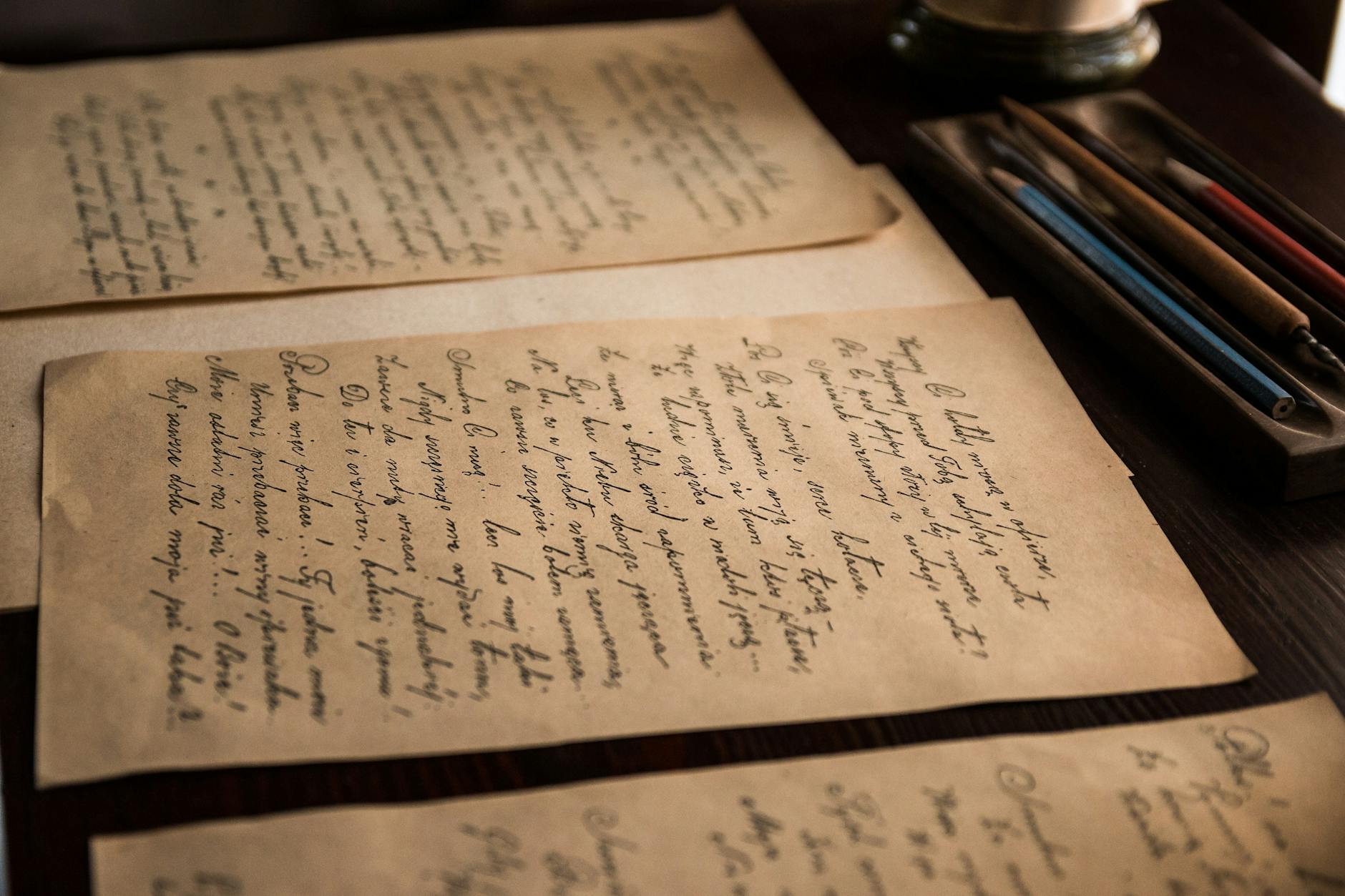
The Weaver motions for Rowan, standing against the wall. “Get me some parchment, ink, and quill, please.” Rowan runs from the room and returns seconds later with the items. “Now, princess, I want you write this down.”
She picks up the quill, dips it in the ink, and waits for the Weaver to continue. “Learn to ride. Wake up earlier than the prince. Find the specific path he takes. Meet him on the trail, not expectantly, but purely by chance.”
She writes fast, but her penmanship is impeccable. “Learn about horses,” the Weaver continues. “Ask the stable master which horses the prince favors. Ask why.”
He waits for her to stop writing. “Find the poetry he reads. Then read it yourself. Learn what moves him. What sets his heart on fire.”
She is writing faster now, finding a purpose in the Weaver’s guidance. The quill scratches over the parchment. The first page is full of notes, and she starts a second page.
“Show up in the places where he goes. Not every day. Twice a week, on different days. Let him see you riding. Let him see you reading under your own tree. Not his. And do not approach him. Let him come to you.”
She stops writing. “But what if the prince doesn’t come to me?”
The Weaver smiles. “Oh, he will, princess. Ask him about horses. Talk to him about your favorite poetry. Listen more than you speak. Let him teach you things.”
She continues writing, listening to everything the Weaver says. When she finishes, she looks up at him.
“There is nothing magic about this,” she says. There is a hint of dejection in her voice, as if she were expecting a fast, quick solution.
“No.” The Weaver shifts in his seat, wincing. It’s better than magic.”
“I don’t see how it’s better than magic. How is it better?”
Rowan rushes in, a cup of tea on a tray for his master. Rowan’s been with the Weaver for five years. He knows instinctively when his master’s pain is overwhelming. The warmth of the tea helps alleviate the pain in his fingers.
“Thank you, Rowan.”
Rowan nods and disappears.
The princess is waiting, patiently, for her answer.
“Magic can make people fall in love. The magic I do can force it. But that’s not real love. It’s an enchantment, princess. The person under the spell? They don’t choose you. They are unable to help themselves. They feel compelled to obey. They remain trapped because of the person who put them under the spell.”
“But I’ve seen it. Their love is for you. They end up adoring you. It’s real.”
The Weaver nods. “They think they do. It’s strong, powerful, and all-consuming. But love? No, princess. It’s not love. It’s an urge. A prompting from beyond themselves.”
The Weaver sips his tea, the warmth helping, not much. But some.
“I don’t understand, Weaver. What’s the difference?”
“True love, princess. It chooses. Enchantment simply obeys.”
Frowning, the princess stares at the two pieces of parchment paper, at the words she’s written in her own script. “You’ve made people fall in love,” she says, harsher than her intention. “You’re telling me none of it was real?”
The Weaver nods, frowning. “Not one bit.”
“Then why? Why did you do it? If you knew it wasn’t worth it for either person, why do it all?”
Setting down his tea on the table, he laces his fingers together, touching his knuckles to his lips. It’s a question he’s been asking himself for thirty years, keeping him awake on countless nights, especially when the pain in his bones makes sleep impossible.
“Because I was well-paid. Because my King and Queen gave me the power, telling me I could use it however I wished. People begged with me, pleaded. I was young. And dumb enough to think I was actually helping them.”
“You weren’t?” the princess asked.
The Weaver shook his head, still frowning.
Picking up the parchment again, she scans through each statement, carefully reading what the Weaver told her. Her lips move slightly as she reads each line.
Looking up from the parchment, she asked, “And this will really work?”
The Weaver shrugged. “I don’t know, your highness.”
“You don’t know?”
“Real love? It’s complicated. Your prince might notice you. Perhaps even fall for you. Maybe he won’t. It could be that he’ll meet someone else, or what if you discover that you don’t really like him? What if the truth is, he’s awful? Does he pick his teeth at dinner? Talk over people? Mistreat his servants? What if you learn all these things after the spell is cast? What then?”
“He doesn’t do any of those things,” the princess insists.
“How do you know that?”
She opens her mouth and then closes it, realizing that she’s only seen the prince at a distance. Stories? She’s heard stories. In her mind, she’s built an idea of him, all assembled from glimpses, rumors, and hopes. Her case is strong, but it’s not factual.
“Find out who he really is, princess. And,” he pointed at her, “he needs to find out who you really are. That list?” he pointed to her pages, “it allows you to meet him. To find out about him. To let him know who you truly are.”
“But what if he doesn’t fall in love with me?”
“Then he doesn’t. And fate has chosen for you. It was never meant to be.”
“All my time will have been wasted.”
“I think not,” the Weaver replied. “You will learn about yourself, to ride horses, read poetry, wake up early, and smell the morning dew, watching the sunrise. Those things, I’m guessing, will matter more than the love of your prince.”
The princess nods, standing up, neatly folding the parchment and tucking it into her cloak.
“Thank you, Weaver. I’m giving you the gold.”
The Weaver shakes his head no. “I don’t want it. Nor do I need it, princess.”
“They say you charge a fortune.”
“I used to,” he says, smiling.
Securing her belongings, she stops to look at the Weaver. Really look at him. Whispy grey hair, thin as cobwebs, is mussed on his head. Dark brown spots dot both his hands that look as delicate as the parchment paper she wrote on. For the first time in the hour they’ve spent together, she really sees him, a man carrying a weight too heavy to bear.
Even though it is rude to ask, the princess asks. “How old are you, Weaver?”
He shakes his head. “Too old.”
“So, magic did this?”
He nods. “Magic takes a toll on the physical body, yes.”
“But you could have stopped, couldn’t you? Why didn’t you?”
His laugh is harsh, brittle, hurting his throat. “Princess? I ask myself that same question. Every. Single. Day.”
Moving toward the door, she stops, turning back to face the Weaver. “Thank you,” she says, bowing deeply.
“I didn’t do anything, princess. You didn’t get what you came for. Why thank me?”
“You told me the truth, Weaver. A princess rarely hears the truth.” She smiles, nods at him, and leaves.
Rowan comes back in the room, clearing the table without a word.
“Rowan.”
“Yes, Weaver?”
“Can you tell me the first spell I taught you?”
Rowan stops moving. He was fifteen when he came to serve the Weaver, at the Queen’s insistence. Five years later, Rowan worked with his master, helping him move around or get whatever he needed, handling the influx of people when the Weaver’s pain was unbearable.
“Yes, Weaver. The love spell.”
“And in the five years you’ve served me, have you ever used it?”
“No, Weaver. Never,” he answers.
“Why not? Isn’t there someone?”
“Magic takes something from you physically. I’ve watched it take from you, Weaver.”
Nodding, he looks at Rowan. In the past five years, he’s taught Rowan everything, every spell, incantation, and formula. And without telling him, he’s shown him what magic cost him.
“But there is someone, isn’t there?”
Rowan nods. “Yes, Weaver. A girl. In a village on the fringes of the kingdom. She’s an assistant to the kingdom’s baker. They supply the castle when the King’s baker has too much to do.”
The Weaver smiled, wincing in pain. “Does this girl have a name?”
“Yes, Weaver. Anna.”
“And she knows you are my servant?”
“No. But I bought Anna’s bread. Every morning.”
“This bread?” the Weaver points to the tray on the table. “It’s delicious. Does she smile at you when you get her bread?”
Rowan’s face turns a crimson red color. “Sometimes she does. Not always.”
“And you decided not to use magic on her?”
“Yes, Weaver.”
“Then talk to her, Rowan. Ask her about her bread. Where did she learn to bake? What does she like to do when she’s not working? Use your words.”
Rowan shook his head. “I couldn’t do that. What if she doesn’t answer me? What if she laughs?”
“Then she laughs.”
Rowan picks up the tray and carries it to the door.
“Weaver? About the princess,” he asks. “Will your advice work for her?”
“I don’t know.”
“You think it might?”
The Weaver took a deep breath. “I think it’s the only thing that could work. Real love, Rowan? It cannot be forced. Only invited.”
Rowan leaves the Weaver sitting alone in his chair. The afternoon light comes through the thin slit of a window, dusty and golden. On the street below, he hears a cart rattling past, the wheels squeaking, a dog barking, and someone calling out to a neighbor.
Closing his eyes, he thinks about the first time he cast the spell. A merchant wanted his competitor to trust him. Trust him without question. The Weaver was young then, twenty-three, still strong and naïve. He cast the spell flawlessly, the merchant’s competitor signing the contract, handing over his business, and partnering with him, all without question. The merchant got just what he wanted, paying the Weaver more than enough gold to live comfortably for a full year. But it came with a price tag, aging the young man a month in one single night.
At the time, the young Weaver felt it was worth it. He was fixing things. Helping people. Making the King and Queen run their kingdom. It felt good to be wanted.
The following week, he cast another spell. Then another. And then, three in the same day.
Both the King and Queen noticed, calling him to the throne room. He thought they were going to tell him to stop. He panicked, expecting them to take away the power they had given him. Instead, they both smiled at him.
“The people love what you’re doing,” the King said. “Crime? There isn’t any. Marriages are flourishing. And merchants are trading and making us richer by the day. This is fantastic! Keep up the good work.”
“Weaver, everyone is happy,” the Queen smiled. “You are responsible for making everyone happy.”
The Weaver smiled, but he saw something. Something in their eyes. It was cold. Calculating. It was as if they knew what the magic was costing him. They knew it was aging him. But they just didn’t care.
“You’re free to continue, Weaver,” the King said. “We won’t stop you.”
He left the throne room feeling empowered. So he continued. Year after year. Spell after spell. Daughters became devoted to whoever their parents picked, and the marriages worked perfectly. Sons grew dutiful to the kingdom. Merchants trusted their partners completely. Soldiers found courage in causes they never questioned. He did it all.
And, with every spell cast, he aged. Sometimes a little. Sometimes a lot.
By thirty, he appeared to be fifty. By forty? He looked seventy. And now, at fifty-three, he could barely walk. Thirty years of casting spells, and his appearance looked like that of an ancient, decrepit old man. Held together by willpower and the few good bones he has left.
He knew then. He should have stopped. He knew this. Everyone did. But the people kept coming. And the gold? It kept piling up. The Weaver kept telling himself he was helping, giving people just what they wanted, making their lives easier.
It was a lie. The Weaver did his best to convince himself it was true. But he knew better.
The truth was simpler and sadder: he was scared to stop. The Weaver was afraid. Petrified to be ordinary and fearful of being powerless. Facing what he’d become was scarier than the magic.
The Weaver considers casting one more spell. Just one. A young woman came yesterday, crying about her dying mother. She wanted her mother to love her before the end. The Weaver’s fingers twitched, remembering the gestures. It would be so easy. So simple. One last act of… what? Kindness? Or cruelty? He closes his eyes and lets the moment pass.
The Weaver woke up a few hours later, the sun lower in the sky than when the princess visited him. Rowan returns with dinner, more bread, more cheese, and a bowl of hot stew. Slowly, he eats, every bite hurting his jaw. Swallowing felt like he was gargling fire.
“Weaver? You have one more person waiting to see you.”
“Rowan? I’m done for the day. Send them home.”
“Master, they’ve been waiting for three hours.”
“Tell them to come back tomorrow.”
“They are offering five times your usual rate.”
He set down his spoon, crossing his arms. Five times his regular rate? He could’ve retired years earlier, amassing the wealth he had. Rowan could buy a farm, build a house, find a wife, and raise whatever grains or animals he desired. It couldn’t buy him a title or province, but it’d be close. So he asked Rowan, “What is it they want?”
“The usual, Weaver. A love spell.”
“No.” His answer was curt, moreso than usual.
“Weaver? Are you sure?”
He nodded, not saying another word about it to Rowan.
Ten minutes later, Rowan comes back and takes the dishes away. The Weaver can hear him talking to the client in the other room. Whoever it is, their voice is angry, rising, and indignant. Rowan is calm, apologizing, and says they should come back tomorrow.
“They called you a fraud.”
“Good.”
“They said you’re washed up. Nothing more than an old man who has nothing left to offer.”
“Probably truer than they know.”
Rowan asks to sit in the chair the princess used. The Weaver motions for him to sit. Rowan is tired. The Weaver wonders what the boy sees when he looks at him. A master? A teacher? A cautionary tale?
“Tell me how things are with Anna.”
Rowan’s face changes. Softens. A smile curls his lips.
“Sometimes she has flour in her hair,” he says. “White dust. It catches the light just right. She doesn’t notice it, or she doesn’t care. Either way, she keeps working, kneading dough, shaping loaves. Her hands move like they’re dancing.” His eyes are dreamy, lost in thought about Anna.
“Did you talk to her?”
“A little. I mostly asked Anna about her bread. She recommended I try the rye last week. She was absolutely right! It’s excellent.”
“Mhmm. What else?”
Rowan leaned forward in his chair, a grin crossing his lips. “She hums. While she works. Old songs. I don’t know all the words, but I recognize each of the melodies. Mother used to sing them when I was little.”
“Did you tell her that?”
“No.”
“Why not?”
Rowan looks down at his feet, then at his hands. They’re young hands. Strong. Hands untouched, not ruined by magic.
“What if she thinks that’s stupid?”
“What if she doesn’t?”
Neither the Weaver nor Rowan said another word. Silence filled the air. The Weaver knows this fear. It’s the same fear that made him reach for magic instead of words. The fear of being seen and found wanting. The fear of offering yourself and being rejected. It’s more powerful than the magic!
The Weaver breaks the silence. “Tomorrow,” he says, “when you go to the bakery? Tell Anna about your mother’s songs. Tell her you like hearing her hum.”
“That’s it?”
“That’s it.”
Rowan stands. He moves toward the door. “Weaver? Do you regret it? The magic? Helping people? All of it?”
The Weaver considers the question, frowning. He remembers the merchant who lost his business. The daughter who was forced to marry a man she didn’t choose. The soldier who charged into battle feeling love for a cause he never understood. All the people whose lives he twisted with his spells. All the false love. He created it.
“Yes, Rowan,” he says. “I regret it. All of it.”
“But you gave them exactly what they wanted, didn’t you?”
“No. They got what they thought they wanted. There’s a difference.”
Rowan nods slowly.
“Teach me the spell to reverse the enchantments.”
The Weaver shook his head. “There is no such spell, Rowan.”
“But you said.”
“I said the enchantment can’t be undone without the consent of the other. The person who’s been enchanted has to want to be free. And the person who asked for the spell? They must release them. Both have to agree. Both have a choice.”
“And no one has ever done that?”
“No, Rowan. Not yet.”
Rowan leaves the Weaver to sit alone in the growing darkness. He ought to call Rowan back and light the lamps. But instead, he sits in the shadows, thinking about all the people he’s enchanted in thirty years.
They are out there, somewhere. Living false lives. Feeling false love. Trapped in relationships, they didn’t have a choice but to choose yes.
And he, the Weaver, did that to them.
In the morning, Rowan came to the Weaver, grinning from ear to ear. “I talked to Anna today,” he said.
“And?”
“She remembered my mother! They were friends, and the songs she hums? My mother taught them to her! She said if I wanted to, I could come by after she closes the bakery, and she’ll teach me the words.”
The Weaver smiled, even though it hurt his face. “See? You didn’t need any magic.”
Rowan, still smiling, starts his morning routine. Opening the curtains. Straightening the Weaver’s bedroom and then preparing breakfast. He’s humming. One of Anna’s songs? Probably.
The Weaver watches him work, thinking about the princess. She’s less than halfway home. He thinks about what she’ll do. Will she follow his advice? Or ignore it?
He hopes it works. Hopefully, the princess finds out that her prince is kind, goodhearted, and worthy of her love. And he also hopes the prince discovers the same about her. Perhaps this time they will choose each other freely, clearly, with full hearts and open eyes. All without any magical assistance.
He hopes.
The sun comes through the window in the sitting room, the Weaver occupying his cushioned chair. The bright, warm light is touching his legs. He shifts in his chair. The pain. It’s still there, it’s always there. But today? It feels different somehow. Lighter, maybe. Or maybe it’s just more bearable.
“Rowan,” he says.
“Yes, Weaver?”
“I want you to do something for me.”
“Yes, Weaver.”
“Find all my records. Every person for whom I cast a spell. Every enchantment I cast. I want you to write a letter, from me, to each of them. Telling the truth. Telling them what the magic really is. And letting them know that if they both choose, they can be free. They both have a choice.”
Rowan stops moving. He turns to look at the Weaver, puzzled.
“Weaver, that could take days. Maybe weeks,” Rowan says.
“Yes. That’s possible.”
“Didn’t you say most of them won’t want to be free? They already believe they are happy.”
“That’s true. But each one deserves to know the truth. They deserve at least that much from me.”
Rowan nods, leaving to get the parchment, ink, and four quills. He understands, now. He’s an intelligent young man. One who will not make the same mistakes the Weaver has made.
Rowan comes back, and they get to work, working all morning. Rowan fetches all of the Weavers’ records. Thirty years of spells, all carefully documented. The Weaver dictates the letter. Rowan writes. They make one copy, then another, then another.
“Dear Friend,” the letter begins. “I am writing to tell you something you may not want to hear. It’s something I should have told you years ago…”
Every letter explains it all. The nature of the enchantment and the cost of the magic. Details of how to break the spell. The Weaver doesn’t apologize, knowing full well apologies aren’t enough. It offers the truth. And a choice. And with the choice, the possibility of freedom.
By noon, Rowan has written fifteen letters. By evening, forty-five. By the end of the week? More than one hundred.
As they work through the days, the Weaver gets weaker with each day. His hands shake more. His breathing grows more shallow, more raspy. Rowan notices. He writes faster, taking dictation even when the Weaver’s voice drops to a mere whisper.
“Rest,” Rowan says, counting letter number two-hundred-thirty. “We can finish the rest tomorrow. We have less than forty to go.”
“No,” the Weaver says hoarsely. “We will finish this today.”
Rowan works through the night, lighting every lamp in the room. He makes strong tea, both for himself and the Weaver. He reads each name from the ledger, writing while the Weaver dictates.
“Dear Friend…”
“Dear Friend…”
“Dear Friend…”
The sun comes up, Rowan still writing. The Weaver can barely speak now. Each word costs him something. But he keeps going. He has to finish. He has to try to undo what he’s done.
By mid-morning, they’ve written the very last letter.
Rowan sets down the quill, feeling his hand cramping. Both his eyes are bloodshot from lack of sleep.
“It’s done,” Rowan says, rubbing his eyes and yawning.
The Weaver nods. He can’t speak. The effort of dictating has stolen his voice.
“I’ll send them today, Weaver,” Rowan says. “All of them.”
The Weaver nods.
With each letter written, Rowan carefully gathers them together, seals them with the Weaver’s signet, and prepares to send messengers with each letter. Then he stops, looking at the Weaver. “What do I tell people now?” he asks. “The new clients who come by. What am I going to tell them?”
The Weaver whispers one word: “Truth.”
Rowan nods. He understands. No more spells. No more enchantments. No more false love. Just truth. Just the truth. The complex, messy, beautiful work of letting people choose each other freely.
That afternoon, a client came, wanting to meet with the Weaver. A young man who wants his new business partner to trust him. Rowan meets him at the door.
“The Weaver isn’t taking clients,” Rowan says bluntly.
“I’ll pay anything.”
“I’m sorry. The Weaver is not taking clients and refuses to talk to anyone. Except me.”
“But I need.”
“What you need,” Rowan says, his voice getting louder, “is to earn your partner’s trust all on your own.” He overheard the young man speaking to the King’s guards as he came in. “That’s why you came, isn’t it? So, talk to him! And be honest! Show him you’re reliable. If you do that? You won’t need magic.”
The young man glares at him, then storms out, both angry and confused.
Another client comes. A mother wants her daughter to obey. Rowan gives her the same answer. Another comes. And another. And another. Fifteen that day, and he turned them all away.
By evening, word has spread. The Weaver is done. No more spells. No more magic. The great age of enchantment? It’s over.
Some people celebrate. Others mourn. Most shrug and go back to their lives, thinking nothing of it.
But the Weaver sits in his chair, listening to Rowan turning away clients. He feels something he hasn’t felt in thirty years. Not happiness. Not exactly. And it’s not peace. But something close.
Relief. Maybe. Or is it hope?
Three weeks later, a letter arrives for the Weaver from the princess.
Rowan reads it aloud:
“Dear Weaver,
I followed your advice. I learned to ride. I woke early. I found the path through the forest. I saw the prince reading his poetry under the oak tree. I brought my own book and sat under my own tree.
He noticed me after the third morning. We talked about horses. He told me about the gray mare he’s training. I told him about the horse I’m learning to ride. We talked for over an hour.
Next week? We talked about poetry. The prince lent me his book! I showed him mine. We read to each other.
Yesterday, he asked if I’d like to come along for a ride with him tomorrow morning. I said yes!
I don’t know if he loves me. I don’t even know if I love him yet. But I’m starting to know him. And he’s starting to know me! And that feels so much more valuable than any spell.
Thank you, dearest Weaver.
With gratitude, princess.”
Rowan finishes reading. He looks at the Weaver.
The old man is smiling.
“She did it,” Rowan says, shocked. “She did it! All without magic.”
The Weaver nods. He whispers: “Better.”
A month passes. More letters come. A merchant writes that his partner left their business after learning about the enchantment, but they’re working to rebuild trust, honestly, this time. A daughter thanks him – she’s finally free to choose her own path, though her parents are furious. Most don’t write back at all.
Later that evening, just before dinner, the Weaver dies. Rowan finds him in his chair, still smiling, the princess’s letter folded neatly in his lap.
At the funeral, Rowan gives the eulogy, talking about the letters they sent. He talks about the truth that the Weaver tried to give people at the end. Rowan tells everyone in attendance about their choices between love and magic. And the difference between the two.
“The Weaver made mistakes,” Rowan says. “He hurt people, and he knew that. It ate at him for years. But, in the end, he did his best to make it right. He tried to restore people’s freedom. And that matters. That counts for something.”
After the funeral, people start coming to Rowan, knowing that the Weaver passed on what he learned to the young man. Not for spells, this time. But for advice. They ask the same questions they asked of the Weaver. What should I do about this person? How do I make them notice me? How do I make them choose me?
Rowan gives them the same answers every time: “Talk to them. Listen to them. Show them who you are. Let them show you who they are. That’s magic that really works.”
Some people listen to Rowan. Others leave angry. But slowly, gradually, the word spreads.
Love. It can’t be forced. It can only be chosen.
Rowan and Anna? They got married a few years after the Weaver passed away. And the princess? She found out the prince wasn’t all she thought he was cracked up to be. Instead, she met a very kind duke who loved her for who she was. The wedding is going to be in the spring.
And Rowan learns that love is the best magic of all.

Leave a comment