Ruby’s breath came in short bursts, running down the emergency stairwell. Her messenger bag bounced against her hip with each step.
“They’re in the building,” she gasped. “Johnson. He always travels. With a team.” Her words came through in a raspy whisper.
“Where. Can. We. Go?” My breath sounded much worse than hers. I couldn’t keep up. But I tried. Both of my legs were on fire, my heart pounding through my ribs. Everything ached and hurt. But I kept moving.
“Parking garage. Level B2. There’s a service exit. Connects to. The Metro. Tunnel.”
We burst through the stairwell door, spilling out into the lobby. The security desk was empty. In every police recreation I watched on television? That was never a good sign. It certainly wasn’t now. Through the glass doors, I spotted two black SUVs idling at the curb.
“The other way,” Ruby hissed, yanking me toward a service corridor.
My phone was buzzing. “Johnson,” I gasped.
“Don’t answer it,” Ruby shouted.
“If I don’t? He’ll know I’m with you.”
She glanced back at the SUVs, considering what options we had. “Fine. Put it on speaker.”
I answered, jogging down the corridor with Ruby. “Yeah?”
“Paul.” Johnson’s voice was calm, almost friendly. “I know she’s with you.”
Ruby’s eyes went wide. She stopped, mouthing, How?
“I don’t know what you’re. . .”
“Your phone, Paul. We’ve been tracking it since you left the museum. I’m not upset. Ruby’s very persuasive when she needs to be. But this? This needs to end. Now. Before someone gets hurt.”
Ruby grabbed the phone from my hand, shouting. “You want the files, Johnson? Come and get them!”
“Ruby.” Agent Johnson’s tone shifted; it was harder. “You know how this ends. You’ve seen it. Before.”
“Not this time, Johnson!” She smashed my phone against the wall, ending the call. For a split second, I thought, ‘Now how am I going to reach Gracie?’ The screen splintered, shattering into a thousand tiny shards of glass. “Oh! Sorry, Paul.” She grimaced a little. “They’ll triangulate the signal if we don’t get rid of it.” I think she was sorry. Just a little bit.
Now we were half-running, half-walking through the hallway, our steps squeaking on the waxed tiles. Ruby, now smiling, pulled out a small rectangular key card from her pocket. In front of us was a solid, metal door. At eye-level was a sign reading, “AUTHORIZED ADMITTANCE ONLY.” She winked at me, smiling.
“How do you have. . .”
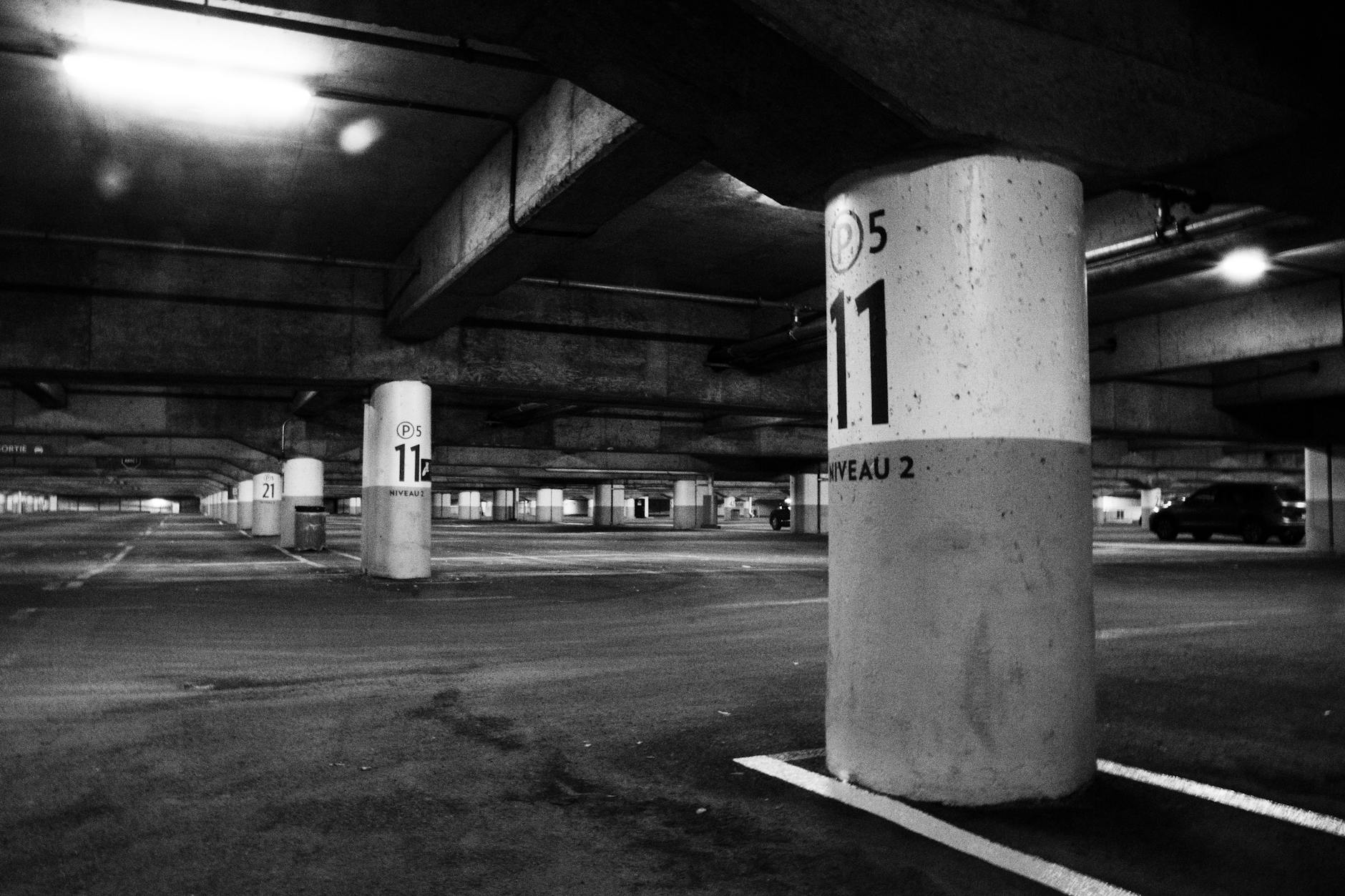
She giggled. “This? I’ve been planning this for months.” An electronic click after touching the card to the door, opening to a concrete ramp descending into darkness. “Stay close to me.” We were in the recesses of a parking garage. Oil, exhaust, and gasoline smells filled the concrete parking structure. The low-level light from the fluorescent tubes flooded the space with eerie yellowish light. This late in the evening, most of those working in the building above left for the night.
“Stop.” I grabbed Ruby’s shoulder, making her turn around and face me. “Show me. The files. Show me what’s in them.”
Ruby took a deep breath, her heart rate slowing. Mine was still high. She pulled me behind a large pillar, one of the support beams of the parking structure. From her bag, she pulled out a manila envelope, at least an inch thick. “Photos, first.” She pulled out a stack of black-and-white photographs. “These? They are all from the original TRI facility. Built in 1963.”
Standing in the cold cement structure, I started flipping through pictures of people I didn’t know, in a time I wouldn’t have remembered, years before I was born. Then, after about twenty pictures, I stopped breathing.
There he was, my grandfather. Younger than I’d ever seen him, standing next to a machine I didn’t recognize, like an MRI, only bigger. Imagine old science fiction films with test tubes, beakers, tubes, and machines. That’s what these images looked like. Only they were real. Real from 1963. My hands started shaking. There were other people in the pictures. The research subjects. People voluntarily strapped down to gurneys, electrodes glued to their faces and heads. Lead wires strung everywhere. Their faces were calm, but terrified.
Ruby encouraged me to keep going. I only had a few more to go, but the blank looks? That got to me. Were they drugged? Under the influence of some narcotic to keep them calm? I didn’t know. But it was getting to me. Then I saw a child, maybe eight years old. Same electrodes. Similar expression.
“They were attempting to map consciousness itself,” Ruby said. “Certain genetic markers were thought to enhance perceptions. They wanted to understand how they worked. So they pushed their research, pushed the subjects toward their enhanced abilities, seeing if they could navigate the building without using a map or their eyes.”
“These are kids. Children, Ruby.”
Ruby let her head sag. “The younger the subject,” she pointed to another photo, this time of a teenage girl, “the more malleable their neural pathways.” Her voice was flat, clinical. “Your grandfather. He was the one. He ran the pediatric trials.”
I felt like I was going to puke. I desperately wanted to throw up, to run away from Ruby and all this TRI nonsense. “So, the man who’d taught me to tie fishing knots, who’d carried me on his shoulders, who’d told me bedtime stories. . .” I couldn’t finish my thought.
Ruby shook her head, acknowledging my pain. She knew what it meant, but more importantly, why it was so important to tell me. “There’s more.” Ruby pulled out another document, this one not as thick as the manila folder. “This? It’s from last year.”
A medical report. But the name at the top? That’s what caught my attention: Paul Sullivan III.
“That’s impossible. I’ve never.”
“Read it,” she said.
The first page, as expected. Name. Date of Birth. All the typical vital statistics. Blood work results. Genetic analysis. Then the following pages included brain scans I didn’t remember taking. A variety of tests, scans, all dated from my last physical exam. None of which I remember, or authorized.
“Your PCP? He is working for TRI,” Ruby said, pointing at the records. “Dr. Braughoff? He’s been on TRI’s payroll for years. Paul, they’ve been monitoring everyone with the genetic markers. Even you. Just waiting.”
“For what?” I spat. It wasn’t fair. I was angry, but not at Ruby. This wasn’t her fault. My grandfather, however, was far from exempt.
Footsteps. We both heard their echoing from the ramp above us. Snatching all the documents from me, Ruby quickly stuffed them back into her messenger bag.
“To be desperate enough to come willingly. All on your own!” She grabbed my arm, yanking me into the shadows. “We need to move. Now.” Her voice now came out as a harsh whisper.
But I couldn’t stop thinking about the medical report. At the bottom of the last page, in Johnson’s handwriting: Subject shows 94% genetic match. Recommend immediate recruitment upon the onset of the family crisis.
“They knew,” I whispered, Ruby, tugging on my arm. “They knew. They knew my Gracie would get sick.”
Ruby looked out between cars, “They’ve been watching you since birth, Paul. Every teacher encourages your curiosity. Every scholarship that came through at just the right time? Every. . .”
A car engine roared to life somewhere on the level above us. Headlights swept across the concrete.
“The exit,” Ruby pointed. “Go! Now.”
Before Ruby knew what I was doing, hell, before I knew it, I was dialing Gracie’s number on Ruby’s phone.
“What are you doing? Are you crazy? Give me that.”
“I’m warning my wife,” I pushed her back, away from me, struggling to hold the phone to my head. Ruby finally gave up, forcing me to the exit.
“Gotta go, Paul.” She held my arm, dragging me through the exit.
I heard the phone ring. Once. Twice.
“Hello?” Yeah, it was Gracie’s voice. Cautious. Naturally.
“Listen, Gracie, it’s me.”
“Paul?” she asked. “Whose phone. . .”
“No time. Listen. Pack. Take the cash and drive your sister’s. Right now. Hang up and go.”
“Paul. You’re scaring me.”
The headlights were getting closer, tires squealing around the turns of the parking garage.
“Gracie. Trust me. Get out of the house. Just go.”
“There’s someone at the door,” she said.
My blood turned to ice.
“Run, Gracie! Don’t answer.”
“They’re saying they’re FBI, Paul. What did you. . .”
“Gracie?” The call ended.
Ruby was running, dragging me along. I followed her, my grandfather’s terrified subjects still burning in my memory. The boy on the gurney. The electrodes. And the building that didn’t exist.
Right behind us, car doors slammed. Johnson’s voice bounced off the concrete: “Paul! Ruby! Let’s talk this through, like civilized people. No one has to get hurt.”
The service exit, one like the one we came through, was just ahead. Disoriented as I was, I wasn’t sure if it was the same door or a different one. Based on the direction we were running? It was a different direction. I saw Ruby’s key card in her hand. A flash of green and the door clicked open, leading us into a narrow tunnel lit by red emergency lighting.
“Once we’re in the Metro system, we can disappear,” Ruby panted. “I have contacts. New identities for all three of us, prepped and ready to go.”
I stopped at the edge of the threshold.
“Paul! Come on! We’ve gotta go!” Ruby came back and grabbed my arm, trying to drag me into the tunnel.
But I was thinking about Gracie. The knock at our door. About Johnson’s calm certainty, Ruby was insane. He wasn’t.
“He has my wife.” I turned around, ready to accept Johnson’s handcuffs or zipties. Whatever he felt like using, I suppose.
Ruby’s face softened. “Paul. I’m so sorry. But. If we don’t go now. . .”
I held out my hand. “Give me the files, Ruby.”
“What?”
“The files. Give them to me.”
Understanding. It dawned on Ruby, starting in her eyes. “A trade. You’re trading all my evidence for her safety.”
“You have copies.” I knew she did.
She shook her head, no. “Too dangerous. These are the originals.”
“No. These are not the only copies. You have multiple copies of everything. At least two. You always have a way out, Ruby. An escape plan, just in case.” We both heard Johnson’s footsteps. Getting closer. Measured. Unhurried. He knew what we already did. We were trapped.
I held out my hand. “Please.”
Ruby clutched her bag tighter. “You don’t get it, Paul. This? It’s bigger than your family. Our family. The people they’ve hurt. Paul. The children. . .”
“I know.” My voice cracked. “She’s my wife.”
Ruby stared at me. Then laughed. It was. . . bitter. Defeated.
“You’re just like him, you know. Your grandfather.” She shoved the bag into my hand. “When they threatened his family? He made the same choice.” Tears streaked her cheeks. “I pity you, Paul.”
Ruby disappeared into the tunnel, the door clicking shut behind her.
Johnson rounded the corner, flanked by two men wearing dark suits. He wasn’t even breathing hard. That really made me mad.
“Good choice, Paul,” he winked. Then he gestured to the bag. “May I?”
I handed it over, wondering if I did the right thing. Ruby’s words boomed in my ears. Johnson flipped through the contents, nodding. A smug look crossed his face.
“Looks like our girl Ruby has been busy. Some of these photos? Well. Let’s just say they’re from a different time. Way different ethical standards.”
“The children. . .”
“Everyone in the program, Paul, was a volunteer. Their parents? Each of them was compensated. Handsomely.” He closed the bag. “But context. It’s everything, isn’t it? These images could be. Misinterpreted.”
“Where is she?”
He pulled out his phone, dialed, and waited. “Safe. As promised.” He spoke into the phone. “Release Mrs. Sullivan. Yes. With apologies for any misunderstanding.” He ended the call. “She’s fine. Confused. Probably angry with us both. But she’s fine.”
“And Ruby?”
Johnson’s face revealed nothing. “Ruby made her choice long ago.” He turned and walked up the ramp. “Come on. It’s time you met him.”
Following him through the gray parking garage, we passed the idling SUVs, returning inside the building I ‘escaped’ from a few minutes earlier. The folder of photographs weighed nothing in his big hand, but I felt their weight in my soul. Those terrified faces. A young boy strapped down on a gurney.
Your grandfather ran the pediatric trials. Ruby’s voice was haunting me. I had so many questions. I was angry. My grandfather betrayed our family. And me.
As we rode the elevator, Johnson studied me. “Wondering if you made the right choice?”
“I made the only choice I had.”
The elevator dinged. Johnson nodded.

Leave a comment