Jack Stevens stood — dripping, barefoot, and towel-wrapped — in the marble-tiled shrine that AquaFit Wellness called an entryway. The brushed-steel doors in front of him? Locked.
Keys? Inside.
Wallet? Inside.
Dignity? MIA since the medication cart incident at Gibson Recovery, where he’d scattered a thousand pills like confetti at the world’s saddest celebration.
He pressed his forehead to the glass.
“Of course,” he muttered. “Even the doors don’t want me here.”
Now, this — this wasn’t just about being locked out in public with very few clothes and even fewer options. No, this went deeper.
After three years as the Transportation Coordinator for Gibson’s MAREM study — shuttling recovery participants to therapy, labs, and housing — Jack had mastered the fine art of being absolutely essential and utterly invisible. The job meant everything to him. But to the rest of the team? He might as well have been a reliable ghost.
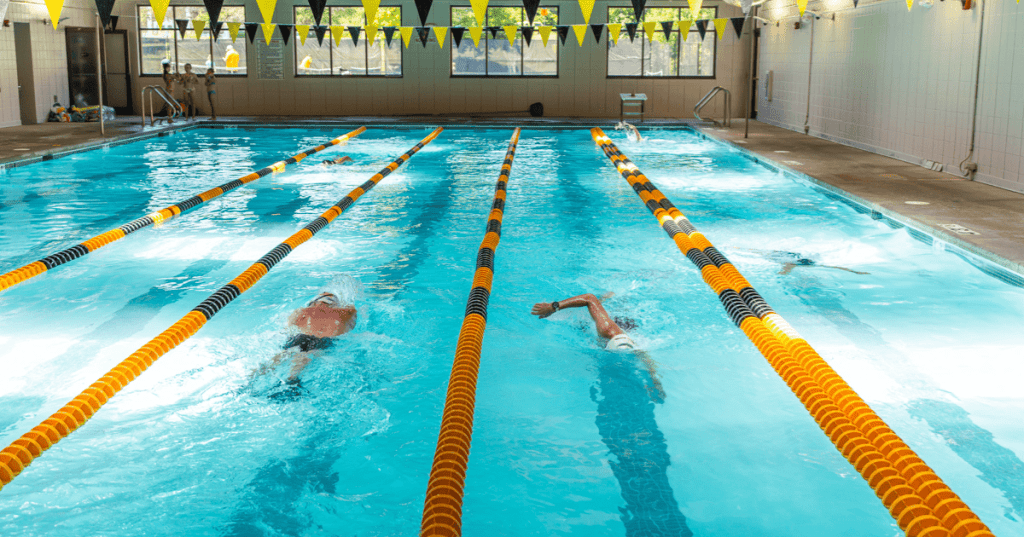
Ten minutes ago, he was in the pool, swimming laps, letting the silent strokes scrub away that morning’s embarrassment.
The cart incident.
Peak Jack.
Finally invited to a staff meeting, trying to slide into a chair without knocking anything over. Instead, he launched an entire tray of carefully—carefully—organized medication across the floor like it was New Year’s Eve at a pharmacy.
Dr. Martinez had been gracious — called it “a reminder of system fragility in human form.” But Jack had seen the look in everyone’s eyes.
Wrong place, wrong time.
The classic Jack Stevens special.
So, when he stepped out to grab his water bottle from the table near the pool — wearing nothing but an AquaFit towel and some post-lap optimism — he didn’t think twice. He’d left the swimsuit behind. After all, even spa-level wellness deserved a little dry respect.
But that moment of misplaced confidence? It shattered the second the doors behind him clicked. Locked.
A sign appeared next to the brushed steel — smug and laminated:
“Elite Summer Hours. Closed 3:30 to 5:00 PM for Deep Cleaning.”
Naturally, no one had mentioned this to the off-peak crowd. Especially the towel-wrapped kind.
And there, in the parking lot: a police cruiser. Slowly prowling.
Jack ducked behind a dumpster.
Look, he wasn’t panicking — yet — but options were shrinking fast.
The clinic next door looked promising until he met Melissa — Patient Services Manager, mid-twenties, offense taken immediately.
“Sir, I’m going to have to ask you to leave!”
“Look, Melissa—” Jack read the nameplate aloud, trying for charm — “I just need a phone. Like, two seconds.”
“This is a medical facility,” she said, pulling herself up like someone about to hit a panic button. “We have patients. Sick people. And you are—you are dripping on the floor!”
“It’s just water. I’m not contagious. I’m just locked out. The key, my phone, everything’s in there.”
“I don’t care if you’re locked out of the White House,” she snapped. “You can’t just walk in here dressed like that!”
“Security!”
And that was Jack’s cue. Exit stage left, flip-flops slapping the pavement in what would definitely not count as a graceful retreat.
But if you think Jack Stevens was the sort of guy to give up? You’ve missed the part where he spent three years failing cattle-call auditions for roles like “man with phone” and “tree that gets cut down.”
So he waited. Behind a bush. Watching AquaFit. Planning.
At 4:45, the evening crowd rolled in. Employees. Members. Yoga mats and organic smoothies in tow.
He timed it perfectly:
“Thanks for holding the door!”
Big cheerful energy. Confidence.
Jack slipped back in. No questions asked.
Twenty minutes later? Dressed. Dry-ish.
T-shirt: vintage Star Wars.
Jeans: too loose from stress weight.
Shoes: tired but loyal Sauconys, molded by a thousand drives and God-knows-how-many setbacks.
Jack worked the 7 AM to 3 PM shift at Gibson — early mornings picking up participants from transitional housing, shuttling them to therapy appointments, lab work, medical visits. By the time his colleagues started their afternoon meetings, he was already done for the day. Hence the 3 PM swim slot that nobody else wanted.
And suddenly, Jack had his wallet. His ID.
And a burning desire for poetic justice.
So: back to the clinic.
“Remember me?” Jack asked, slapping his ID on the counter. “Jack Stevens. Not crazy. Not homeless. Just a guy who needed a phone.”
Melissa stared.
“I’d like to speak to your supervisor.”
He adjusted his t-shirt.
“Because your version of compassion? Needs attention.”
Her smile stayed frozen until she reached for the phone again.
“Security.”
This time, security arrived. Eventually.
We got Frank — who looked like he’d voted for Carter, and remembered it — and Derek, who jogged in like he was chasing a fresh box of crullers.
“What’s the problem?” Frank asked, beatific in his exhaustion.
“This man is harassing our staff!” Melissa wailed.
“I asked to use your phone,” Jack said, hands up. “Is that what we’re calling harassment now?”
Derek — wheezing from just existing — raised a hand like a substitute gym teacher: “Do we need to escort him out?”
“You know, Katie would be so disappointed in your behavior,” Jack said, casually. “She always says you should treat people with respect. Especially in healthcare settings.”
Melissa blinked. “Katie… Katie Stevens?”
“Stepdaughter,” Jack said. “Practice Administrator, right?”
Melissa’s career prospects paled in real time.

Frank cleared his throat. “Maybe we should all just calm down and move on.”
“You’re right, Frank,” Jack said, straightening his Star Wars t-shirt. “Time to go.”
And just beyond the window? White tents. Perfect hedges. That unmistakable clink of wine glasses.
A gala. Complete with punch. Or something red, anyway.
Jack found a full pitcher abandoned near a cocktail table. Took one sip. Gave it a name:
Liquid Courage.
Some kind of punch. Rum. Vodka. Cranberry juice, maybe.
He poured himself a generous helping and slipped in just as the event was shifting gears.
Jack found himself near the main pavilion, where a small crowd had gathered around a wine education station. That’s when the woman with grape-sized pearls spotted him.
“Fascinating attire.” A woman said, voice bright as crystal. Well, Chrystal.
“I’m with B Magazine,” she smiled, stepping closer with notebook in hand. “What’s your medium?”
The small group turned toward Jack — maybe eight or nine people in evening wear, wine glasses glinting in the setting sun. A few more drifted over, curious about whatever artistic statement was happening.
Jack paused. Reacted the only way a lifelong actor failing upward could.
“Performance art.” He gestured at his shirt. “A deconstruction of class pretense using vintage pop culture and uninvited access.”
The crowd ate it up.

Senator Morrison even nodded from the edge of the group. “Authentic Missouri spirit,” he said proudly, like Jack was a tourism brochure.
More guests gathered, wine glasses catching the evening light. Someone asked about his “artistic process.” Another wanted to know if he was “available for private installations.” The circle had grown to a dozen people, all hanging on his every word like he was the evening’s featured entertainment.
Jack smiled, but his eyes kept drifting back toward the clinic, visible through the trees about fifty yards away.
“You know what?” Jack said, raising his glass. “I think you’d all enjoy seeing some real performance art. Something with actual stakes.”
Chrystal perked up, pen ready. “Oh?”
“Follow me,” Jack said, starting to walk toward the edge of the pavilion. “I want to show you what happens when someone really needs help.”
The crowd murmured with interest. A living art piece with audience participation? How delightfully avant-garde.
Jack led his dozen wine-tasting patrons away from the white tents, across the perfectly manicured grass, past the rope barriers, and onto the sidewalk. They moved like some kind of Renaissance parade — Cape Girardeau’s cultural elite trailing behind a guy in a Star Wars t-shirt, crystal glasses still in hand, heels clicking on pavement as they approached the medical clinic’s entrance.
And when they entered that clinic behind him — wine, wealth, and whispers of power trailing in — Melissa looked up from her desk and went pale. She was still there, probably filling out incident reports about her earlier encounter with Jack. Frank and Derek had apparently gone back to their golf cart, nowhere to be seen.
The small lobby suddenly felt microscopic. A dozen people in evening wear crowded into the space meant for maybe four waiting patients. Senator Morrison had to duck under a hanging plant. Chrystal squeezed between two chairs, still scribbling notes. Wine glasses clinked against the magazine rack.
“Well, hello again,” Jack said, gesturing with his highball glass. “I’m back! And I brought some friends who wanted to see how Midwest Medical treats people in crisis.”
Melissa’s eyes darted between Jack and the unmistakable faces of Cape Girardeau’s elite — people whose names appeared on hospital wings and charity gala programs. Her boss’s stepfather had just walked in with half the city’s board members.
Chrystal scribbled in her notebook. “Real human impact,” she said aloud.
“This is not entertainment,” Jack said. “This is what happens when someone in need gets dismissed.”
Senator Morrison cleared his throat. “You’re being a bit dramatic—”
Jack turned.
“Dramatic?”
He straightened his shoulders.
“I work with people in recovery. People who haven’t seen their kids in years. Who’ve relapsed, lost jobs, lost homes.”
(Pause.)
“And they’re still trying. You think a front-desk cold shoulder doesn’t matter? It matters. Little things like this? They break people. And all someone had to do was say, ‘Sure, use our phone.’”
The room was silent. So quiet, even Frank stopped breathing through his nose.
Jack softened.
“You know what makes me different from some of the people I drive? I had enough cash for an AquaFit membership. That’s it. That’s the whole gap between them and me.”
He turned to go.
“You know what, Frank was right earlier. Show’s over.”
But Morrison stepped in. “Join us for dinner? Please. It would mean a lot.”
Jack didn’t miss a beat.
“Thanks, but I’ve got people depending on me tomorrow. Real ones, with actual stakes.”
He raised his highball glass. “But hey. I think I’ve made my point.”
He vanished down the path, steps echoing against stone and laughter behind him fading like applause.

Back at his car, phone buzzed.
Katie: “Heard you stopped by the clinic. Everything okay?”
Jack smiled.
Jack: “Just making sure your staff knows how to treat people. Proud of you, kiddo.”
He looked up one last time — the wine tents glowing like fairy tale castles in the dark. And tomorrow? Tomorrow he’d do it all again. Pickup Marcus. Drive Sarah. Be the invisible one — showing up, right on time.
Jack adjusted the mirror, nodded once at himself.
Sometimes the best performances are the ones you don’t audition for.
Sometimes being seen — truly seen — happens exactly when you’re not trying.
He pressed the pedal.
Blue and red lights flashed in his rearview mirror. Jack pulled over, and Officer McKenzie approached his window.
“Do you know why I stopped you tonight?”
Jack looked back toward the glowing wine tents, then at the officer.
“Wrong place, wrong time?”
McKenzie chuckled. “Broken taillight. Get it fixed.”
And this time, Jack Stevens? He wasn’t the wrong person in the wrong place.
He was finally where he belonged.


Leave a comment