You expect certain sounds in Tualatin in the evening. Cars driving over the pavement, catching every uneven section with a thunk-thunk. The acceleration and deceleration of semi-trucks, some shifting up or down. It all depends on their speed. Whether or not they catch the beginning or end of a traffic light’s cycle will determine the air brake activation. It sounds like fingernails on a chalkboard. Rain makes the wet pavement sound muted, almost like someone put a blanket over the road. And the puddles full of fresh rainwater slosh as each vehicle plows through it. But a transformer blowing up less than a block away? That’s not something that goes unnoticed.
It was your typical end-of-winter, the beginning of spring day in the Pacific Northwest. Wet. Rainy. A little cold. It’s not unbearable like January and February. But we grew up here. For us, wearing a sweatshirt, jeans, maybe a hat, Reeboks, or some other shoe (we all hated Nikes) and jeans were the norm. Not dark jeans, heck no! Those were reserved explicitly for rural people. Not city kids like us. We wore acid-washed Levis or Guess. Wranglers were saved for, well, cowboys and farm girls. Not that we lived in the city of Portland. We lived on the outskirts. Tualatin. Southwest Portland, according to us locals.
The four of us were standing outside. Finishing our cigarettes outside because Tim wouldn’t let us smoke in the apartment. Tim, his girlfriend Samantha, Rosie, and me. None of the four of us smoked the same kind of cancer stick. Yeah, we knew they were bad for us. Yeah. We ought to quit. But we had life by the short and curlies, so why not? Live life fast and free. We were young. In our early twenties, the world was ours.
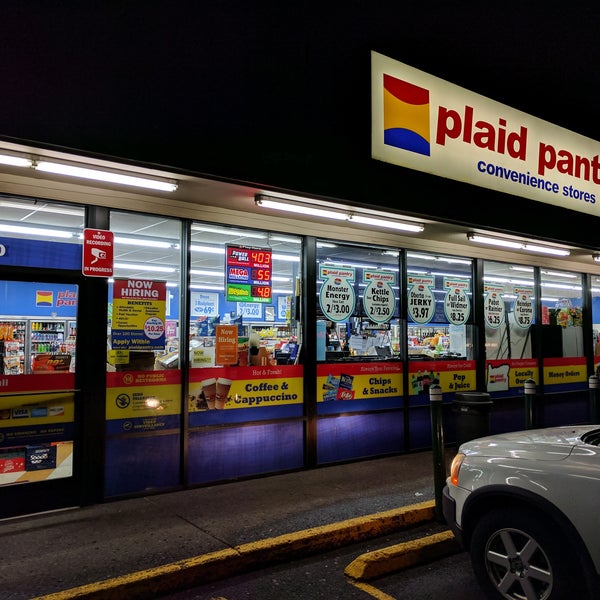
Plaid Pantry wasn’t far, so we walked the six blocks to buy some Budweiser. That was our beer. Budweiser. Go figure. Today, I’d never drink that, choosing instead an IPA or some other microbrewed beer, if I drank it at all. Personally, I prefer vodka on the rocks or bourbon neat.
“Chris, can I get a smoke?” Sam rarely asked for a cigarette, considering she was barely eighteen. Tim smoked Winstons, the harshest of all cancer-causing toxic materials. He said he liked the eagle on the box. They were the brand of his father, an ex-con currently incarcerated in Chino, California. That didn’t make sense to me since Tim said his Dad was convicted in Oregon for grand theft auto, threatening a police officer, and possession of a lot of cocaine. Tim never told us how much, preferring to keep that to himself. Back then, we didn’t have Google or any other way to check public records. Sam tried to smoke one of Tim’s Winston’s and coughed for almost three minutes. We all thought she was going to throw up, but thankfully, she didn’t.
“Yeah,” I said, pulling a Camel light from the box. I preferred the box of twenty over the soft pack. Smashing them in my pocket was a thing for me. The box prevented that from happening. Well, from happening as often. Sam wasn’t inhaling, but that wasn’t my problem. Probably better for her anyway. “Here.” Tim held out his lighter, the flame dancing in the mist. Sam inhaled a quick drag from the butt, blowing out the flame but still catching it on fire. Rosie laughed. Tim rolled his eyes.
“Seriously, Sam?” He tucked away the lighter. “You can’t manage to light a smoke without blowing out the lighter?”
“There are other things she likes blo . . .” Sam punched me hard. I suppose I did deserve that. Rosie smiled, winking at me. I knew she was thinking it. She knew more about Sam and Tim than I did. Then again, the two of them had been friends since middle school, even though that wasn’t a thing in Oregon.
“She can’t handle a real cigarette.” The smug sound in his voice irritated me. Tim could be a bit of a jerk. He wasn’t a football player. He hated everything high school. Football. Track. Band. Student Council. Classes. I guess he hated learning in general, even though he was wicked intelligent and read books only honor students dared to open throughout their high school years. I figured between his jailbird daddy and his inattentive mother, it stood to reason that he’d read anything and everything.
“Leave her alone!” Rosie spat. My girlfriend was quiet. Most of the time. But when she thought Tim took it too far? That’s when she’d pop off to him. Sam asked her not to, saying she needed to stand up for herself. Rosie listened to Sam. But not this time. “You are acting like an asshole.”
That’s the other thing about my girlfriend, Rosie. She didn’t call people names. Maybe it was because her mom was a family counselor, and some of that emotional healthiness of her mom rubbed off on her. I think Rosie didn’t want to fight. Probably some from column A and a little more from column B. Whatever the case, Rosie made a point of not calling people names, articulating her point using similies and metaphors instead of attaching a name to a person. She’d said you are acting like, or you resemble, or you remind me of, instead of you are an ass. Rosie didn’t fight over name-calling. She fought because she didn’t name-call. Allie gave her a black eye because Rosie refused to call her a slut. Rosie said she was acting slutty.
“You want me to leave her alone, Rosie?”
“No!” Sam whined. “Don’t leave me, Tim.” She snuggled up to him. Sam made a point of keeping the smoke away from him as best she could. Each time she tried to prevent the smoke from drifting into her eyes, it managed to smack her in the face.
My back was turned to Highway 99, facing the sliding glass door leading into Tim’s apartment. We were the only people outside at 10:24 P.M. on a Wednesday night. Everyone else had real jobs, with banker’s hours: 9 to 5. I took the last drag of my Camel and flicked the butt to the ground, crushing it under my toe. A flash, bright enough to make me think it was a lightning strike, made me spin around so quick I thought I’d lose my balance. A metallic taste filled my mouth; the smell of burning electricity and a cracking sound, like splintering wood, made me blink several times before I could understand what I saw.
The four of us stood still, staring at what we had witnessed – a semi-truck managed to drift off Highway 99 enough to ram against a telephone pole, buckling and snapping the post like a toothpick in the mouth of a trucker.
“Woah.” Tim’s statement echoed what we were all thinking, unable to articulate any of it.
Sam covered her mouth with her hand, whispering, “Do you think he’s okay?” Another bluish flash of electricity made us think twice about approaching the highway or the truck. A wire buzzed on the trailer, popping and crackling with bluish-yellow light. I remembered smelling burning rubber, a good sign that the cab was pulsing with thousands of volts.
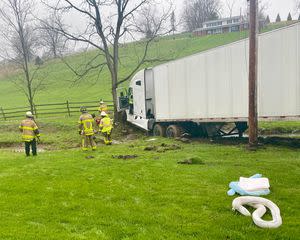
It didn’t take long for first responders to reach the scene, and we were far enough away from the accident that they wouldn’t ask us why we were outside or where we lived. We knew enough to know that we looked young.
“I don’t know.” That’s when I shouted, “Look! Someone’s trying to get out of the truck!” We watched, stunned, as the driver tried to open the door. More blue flashes sent sparks flying from the door of the truck. EMTs got close enough to yell at him. We couldn’t hear it, but we guessed that they were trying to tell the driver to sit tight and wait until they got the power turned off.
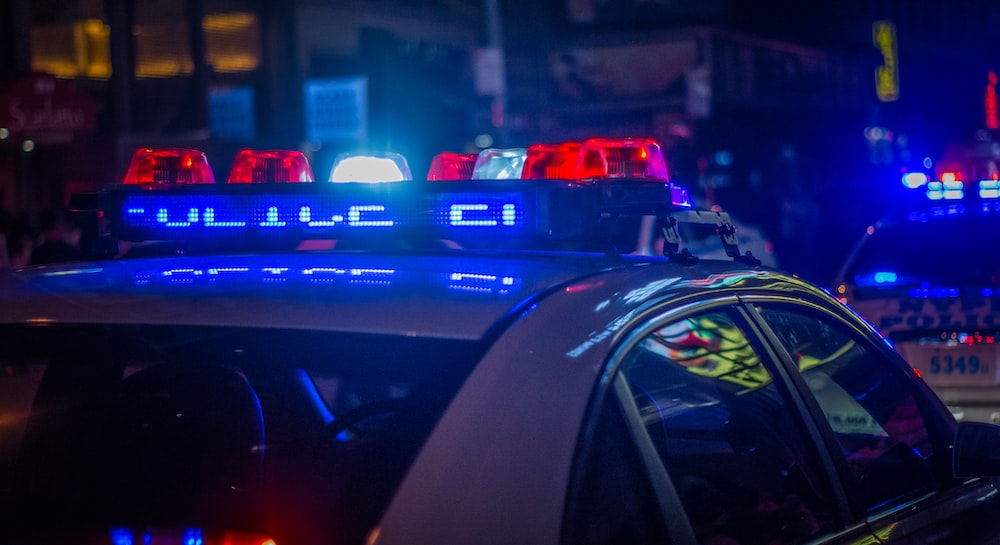
The streetlights flickered and then went out, as did the power in the apartment complex. The silence was deafening. The lights from the fire danced over the apartment windows, eerily highlighting the first responders in a reddish-white glow. The fire truck parked a safe distance from the semi-truck and the wires. Three Tualatin police cars slowly edged up near the fire truck. The last officer on the scene popped several flares, keeping traffic as far away from the electrified truck as possible.
We watched for a few more minutes, ensuring the driver was safe before going inside with the beer.
“Anyone up for watching COPS?” Tim asked, sliding the door open and inviting us inside.

Leave a comment