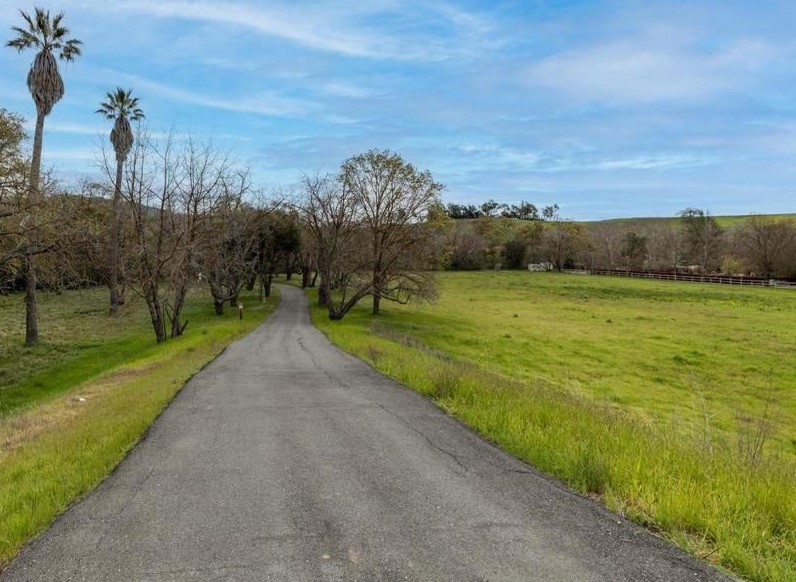
The drive out to the dance that October evening wasn’t much to remember, other than the country road we drove out. Nothing to look at except the acres and acres of dry, brown grass, dead or dying from summer’s heat. I don’t remember driving that far out before. In Manteca or Modesto? Sure. That was expected, what with all the cow fields. Cow fields. It’s like I’ve never seen cattle before. Well, up until the first time we drove out to the waterslides, it wasn’t. I’d never been exposed to farmland, cattle, pigs, cows, or chickens. Growing up in Seattle sort of killed any idea of farming. Not that I regret that at all. I appreciate farmers and their overall work ethic. Not all farmers are created equal. But those that work hard, plant, harvest, and have high yields are some of the hardest workers I’ve ever met.
But farms just outside our suburban neighborhoods? It seemed highly unlikely, yet we drove straight to Trinity’s house through these fields. Trinity’s farm lay in what would later be annexed off into San Ramon and Danville, cutting the property almost in half, like a diagonal sandwich cut. But in 1984? It was considered no-man’s-land, not part of San Ramon or Danville. Electricity came from San Ramon’s infrastructure. Trinity’s family lived off well water, not connected to either city, and their trash was either burned, composted, or picked up once every two weeks or so by the sanitation department of Danville. San Ramon refused to pick up their trash, insisting the farm was Danville’s problem.
Dad drove, which was fine by me. Mom would ask too many questions about the girl. Did I think she was pretty? Yes. Did she go to our church? Yes, Mom. Did she have a boyfriend? Mom, I don’t know. And countless other questions that would be answered with a yes or no. She wanted to talk. She was trying to make up for her abusive behavior. But I wouldn’t know that until years later. I was grateful Dad was driving. I didn’t have to answer any more questions, and Dad could tell I wasn’t in the mood for her nonsense. Plus, I didn’t want to talk. I wanted to go, I thought. Going made me nervous. I thought, rightfully so at the time, that no one liked me and nobody wanted me there. I wasn’t far off, but no one knew what life was like at home. And none of the people that were closest to me knew either. If they did? They didn’t talk with me about it.
“Jace?” Dad only called me Jason when I was in trouble. Otherwise, it was Jay or Jace. Truth be told, I like Jace better than Jay, but no one ever knew that. Not even my Dad.
“Yeah, Dad?” He backed out of the driveway, checking and rechecking his mirrors. Dad was a superb driver. The only ticket I watched him get in my lifetime was in Seattle when he crossed four lanes of traffic on the freeway, signaling once. I always thought traffic rules in the West Coast states, Washington, California, and Oregon, apply equally. As the officer handed my Dad the ticket that day, I learned a valuable driving lesson. Be careful if you are from outside the state. Out-of-state license plates get pulled over more than in-state plates.
“This girl?”
“Trinity.”
“Trinity.” He said her name, elongating each syllable. “Seems like she’s a bit outspoken.”
“Yeah, she can be.” I’m not sure, but I think I told him about the day she and Melissa started laughing, stopping our class in midstride. Mrs. Wilkins had to be the most patient homeroom teacher ever. Junior high kids are a nightmare! And to this day, I have an incredible amount of respect for teachers. But junior high teachers, in my opinion? There is a special place for these men and women willing to subject themselves to the immaturity of these soon-to-be-teenagers. That day we couldn’t get through the subject material Mrs. Wilkins wanted us to cover. Instead, as patient as she was, she waited for the giggles to stop between Melissa and Trinity. Every time they started to calm down, one girl would look at the other, and the laughter would start all over again. After a while, it was impossible for our class to not join it. That made it ten times worse, with Mrs. Wilkins finally caving in, letting the giggles get to her too. It was one of my best junior high school memories.

“The dance was her idea?” Dad never fished for information. If he wanted to know something, he asked flat out. Mom tried to weasel it out of you.
“Yeah. Trinity’s frustrated because the school won’t condone holding dances. So, she took it upon herself to hold a Halloween dance and birthday party at her house.”
“Smart girl,” Dad replied. “What do you think of her?”
“She okay,” I said, trying to convince myself that I didn’t like her, that I didn’t want to kiss her or hold her hand. Or even slow dance with her. I don’t think Dad bought it. I know I didn’t!
Dad grinned, nodding slowly.
“Have you ever been out this far?” I asked. Dad liked going for drives by himself. When we were younger, he owned a 1975 Harley Davidson Sportster. He took me with him for rides a few times. Then, one day I came home from school, and it was gone, along with the three helmets.
“A few times,” he said, staring out the windshield at the dried-out grass fields. It wasn’t hard to find Trinity’s farm. It was eight miles from our house. And two miles of that? On gravel. The dust from the car in front of our truck led the way. That’s what Dad was watching for. He recognized the Volkswagon Bug in front of us. He co-taught a Sunday school class with Howard, and Howard was Christopher’s Dad, a classmate of mine. Me and Christopher didn’t really get along. He loved everything football. Not me. I hated the game. Well, all sports, actually. But I wouldn’t let that stop my Dad from teaching the class. I was grateful he wasn’t teaching junior high kids, but I suppose having one in the house was enough for him. As I said before, there’s a special place in heaven carved out just for those teachers. “Hey, that’s Howard’s Bug. I guess Christopher is going to the dance too?”
“Oh goody,” I said, rolling my eyes.
“Jace, you don’t like Christopher?”
I shrugged. “Not really.”
“Why do you think that is?”
When Dad asked questions, it was more for me to decide what to do than to provide him with specifics. “I’m not into sports, and he’s a football fanatic.”
“Yeah,” Dad laughed. “So’s Howard.”
“It’s all about the Raiders. Every word that comes out of Christopher’s mouth is about how great the team is, how aggressive they are, and how they are the best team ever. Even though they struggle to come together as a team.”
“How do you know that?”
“Other friends who actually follow football. They tell me the Raiders suck under pressure. That’s when they get aggressive on the field. That’s when they hurt the players on the other team.”
“That doesn’t sound very sportsmanlike.”
“It’s not, but Christopher doesn’t care. He’s all about the violence in the game. I’m not.”
“I can see that.” Dad was quiet for a few seconds. “Do you like Trinity Jace?” We pulled into an open space where several cars were parked, and others turned around, ready to drive back down the gravel road.
“Bye, Dad,” I replied, not answering his question. Instead, I opened the door, shut it without looking back at him, and went to the dance. I heard him drive away before I turned around to see the red color of the truck’s brake lights.
Halloween decorations reminded you that this wasn’t just a dance. It was a Halloween dance! No one wore costumes. Everyone wore church attire which was a little nicer than their regular school clothes. The girls wore anything you weren’t allowed to wear at our conservative private school, like halter tops and belly shirts. Ten hay bales were stacked on either side of the giant barn doors in a semi-pyramid stack. On the right side of the barn, atop the hay, sat a homemade scarecrow. A red bandana was wound around the white ballon-head neck. A face was drawn on it with Sharpie. I doubt anyone looked twice at it. Most of the kids were there for two reasons: to dance and socialize.
Almost every girl from our eighth-grade class, except for three, made it. Those girls’ parents were what I’d call strict; no fraternization with the opposite sex outside of normal school activities. To attend a dance would be akin to idol worship and entertaining the idea of sexual activity in dark corners. At the farm, there would be plenty of those. There was no school the next day, as this was a Friday night activity, so it wasn’t because they had to study. But these girls weren’t allowed to go the skating rink on a weeknight, much less during someone’s birthday party. Some of the most exciting and drama-filled weekends were during those years when the skating rink was the place to be. I wonder if these girls would allow their children today to go to dances or other social activities. I’d bet they would if only to let them experience the things they didn’t get to do.
When I showed up, the music was loud, the same as at the skating rink. Massive speakers attached to a tripod and extended on a pole sat almost as high as the scarecrow on the hay. As per junior high protocol, the girls were on one side of the barn, the boys on the other. Something about dances separates the sexes quickly. It’s like food coloring in water; the second you add Dawn dishwashing detergent to the water food coloring mix, the color spreads to the sides, just like the boys and girls were now. In our case, the detergent was popular 80s music. I’m not sure if they were playing records or tapes. Learning that the music was prerecorded and mixed together wouldn’t surprise me. That would be the norm.
“Hey, Jace!” Trinity saw me come in and greeted me. “I’m so glad you made it! This is gonna be a blast.” To say I was surprised would be an understatement. She knew my name? She actually knew who I was? In my nervous state, I zipped up my jacket, doing my best to hide a cheap flashlight I decided to bring with me at the last minute. I figured in the middle of the country, the beam would shine brightly into the darkness. Then again, it was cheap, not like the one Tee claimed to have shined in the lights of drivers in his affluent neighborhood.
“Thanks,” I said, doing my best to smile while at the same time hiding the flashlight bulging out of the Member’s Only jacket I wore. I’m shocked she didn’t say anything to me about it. I guess she was too busy being a good hostess, checking on everyone. She managed to get the dancing started with The Warrior by Patty Smyth. All the girls joined her in front of the barn. The dance floor was a flattened-out dirt pad. I pictured it covered in water and turning all that dirt into mud, which explained the cuffs of her jeans on those wetter rainy days.
Some girls grabbed a few of the more popular guys, like the class clown, Darrell Casten. Darry, the nickname the other sports guys gave him. He was well-liked by most of the kids, myself included. But his humor had bodily sounds from his mouth and rear end, typically getting laughs from the girls and the boys. Our teachers let him get away with his antics every once in a while. He often found himself in detention. A few weeks earlier, he was almost suspended for a vulgar outburst during Jenny’s speech on Earnest Hemmingway. No one, not even Mrs. Jindrich, was thrilled with the report. Most of us were almost asleep, but not Darry. Using all his creative talents, Darry silently blew up a paper lunch sack and popped it with a hard whack. I’m glad I wasn’t in his class because my understanding is everyone, with Jenny being the only exception, had to write five hundred words on why it is rude to not listen to others. Trinity was in that class, sitting right behind Darry when it happened. I heard that Trinity laughed and snorted so loud that a couple of her girlfriends also laughed. Jenny, embarrassed, was unable to finish her report. Mrs. Jindrich should’ve given the poor girl an A just for putting up with that crap. You remember what I said about junior high teachers? Yeah. Mrs. Jindrich didn’t deserve that.

Leave a comment